



German Regional Elections: Implications for Federal Government Stability

German Regional Elections: Implications for Federal Government Stability
German Regional Elections: Implications for Federal Government Stability
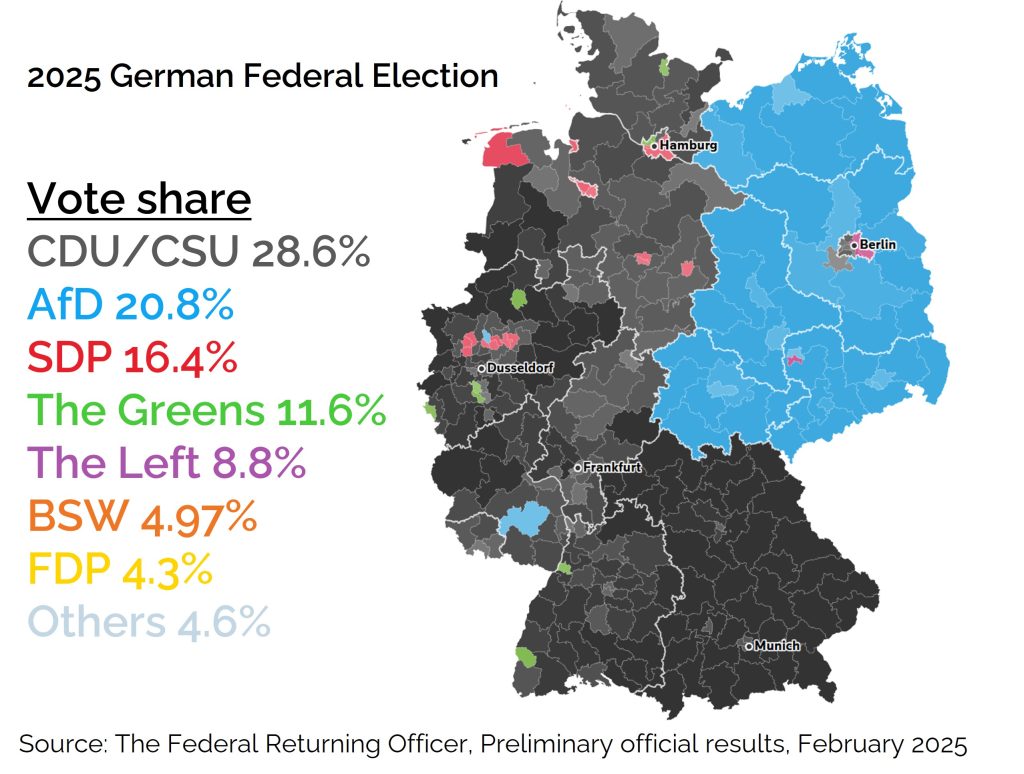
Germany is undergoing a turbulent political phase following regional elections in Berlin and Mecklenburg-Vorpommern. The results highlight the decline of traditional parties like the CDU and SPD, alongside the rise of the AfD and the Left. These shifts threaten federal government stability and could reshape the country’s political trajectory.
Geopolitical & Strategic Context
Historical and Political Background
The recent regional elections in Berlin and Mecklenburg-Vorpommern have unveiled significant shifts in Germany’s political landscape. The CDU, long considered a cornerstone of German politics, has suffered substantial losses in both regions. The SPD, while still in power, faces internal and external challenges, including criticism of its leadership and policies.
Conversely, the AfD has experienced a notable surge, capitalizing on public dissatisfaction with traditional parties. The Left has also gained ground, particularly in Berlin, reflecting a growing preference for progressive policies in urban areas. These dynamics underscore an increasing divide between rural and urban regions in Germany.
The regional elections have become a litmus test for the adaptability of traditional parties to societal and political shifts.
Strategic Implications
- ♦ Increased pressure on the federal chancellor to deliver tangible reforms to restore public trust.
- ♦ The rise of the AfD amplifies populist rhetoric and challenges traditional political equilibrium.
- ♦ New political coalitions could lead to profound changes in local and federal governance.
- ♦ The decline of traditional parties opens avenues for innovative electoral strategies targeting youth and urban demographics.
Future Trajectories
Future Trajectories
Germany is likely to face a period of political instability as traditional parties strive to recalibrate their strategies to regain public support. This could result in leadership changes within the CDU and SPD, as well as new coalitions between smaller and larger parties.
At the federal level, the government may need to prioritize issues such as inflation control, improved social services, and enhanced internal security to prevent further erosion of public trust. Simultaneously, the AfD could leverage this situation to solidify its position as a major political force.
On the international stage, these shifts could impact Germany’s image as a stable partner within the EU, necessitating new diplomatic strategies to maintain its global standing.

Prepared & Analyzed by: Strategic Studies Desk | AboMatrix