



Volkswagen’s Bold Cuts: 5,500 Managers Axed

Daily Monitor
September 21, 2026
Volkswagen’s Bold Cuts: 5,500 Managers Axed
Volkswagen unveils sweeping cost-cutting measures, sparking fierce resistance from unions and political leaders.
Volkswagen, one of the world’s automotive giants, has announced a radical restructuring plan that will see 5,500 managerial positions eliminated globally. This move, part of the company’s ambitious ‘Vision 2030’ strategy, aims to streamline operations and achieve a targeted operating profit margin of 9% by the end of the decade. However, the announcement has ignited a storm of opposition from labor unions, employee representatives, and political leaders, who view the cuts as a threat to jobs and regional economies.
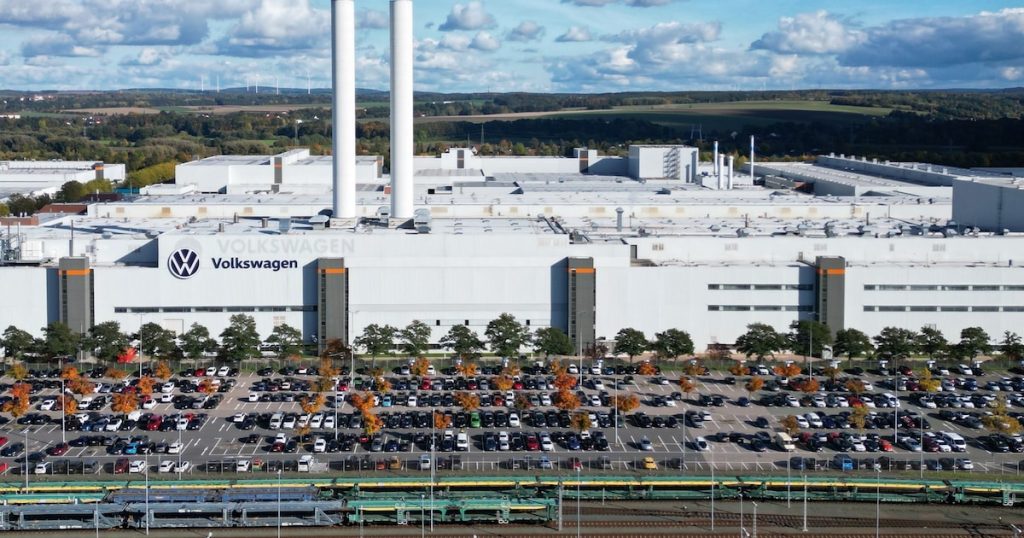
The restructuring plan, revealed in a report by ‘Manager Magazin,’ includes the potential closure of four major production facilities in Germany: Hannover, Zwickau, Emden, and the Audi plant in Neckarsulm. These closures, if implemented, could result in the loss of up to 100,000 jobs worldwide—double the number initially projected. Volkswagen’s supervisory board is set to deliberate on these proposals in early July, with fierce debates expected as labor representatives hold significant sway within the board.
A key component of the cost-cutting measures involves slashing investments in research and development by €50 billion between 2027 and 2031. This reduction will leave Volkswagen with a budget of €135 billion for innovation and infrastructure during this period. While the company aims to reduce overhead costs to 12% of automotive revenue, critics argue that such drastic measures could undermine its competitive edge in the rapidly evolving automotive industry.
Labor unions, led by IG Metall, have vowed to resist the plans with full force. In a joint statement, IG Metall Chair Christiane Benner and other union leaders condemned the proposals as ‘irresponsible threats’ to workers and regional stability. The state of Lower Saxony, which holds a 20% stake in Volkswagen and wields veto power over major decisions, has also voiced strong opposition. State officials have pledged to block any plans involving plant closures or attacks on employee representation.
The controversy underscores the tension between corporate ambitions and social responsibility. While Volkswagen seeks to position itself as a leaner, more profitable enterprise, the backlash from unions and political leaders highlights the broader implications of such sweeping changes. As the supervisory board prepares for its decisive meeting, the future of Volkswagen’s workforce and its role in Germany’s industrial landscape hang in the balance.
The restructuring plan, revealed in a report by ‘Manager Magazin,’ includes the potential closure of four major production facilities in Germany: Hannover, Zwickau, Emden, and the Audi plant in Neckarsulm. These closures, if implemented, could result in the loss of up to 100,000 jobs worldwide—double the number initially projected. Volkswagen’s supervisory board is set to deliberate on these proposals in early July, with fierce debates expected as labor representatives hold significant sway within the board.
A key component of the cost-cutting measures involves slashing investments in research and development by €50 billion between 2027 and 2031. This reduction will leave Volkswagen with a budget of €135 billion for innovation and infrastructure during this period. While the company aims to reduce overhead costs to 12% of automotive revenue, critics argue that such drastic measures could undermine its competitive edge in the rapidly evolving automotive industry.
Labor unions, led by IG Metall, have vowed to resist the plans with full force. In a joint statement, IG Metall Chair Christiane Benner and other union leaders condemned the proposals as ‘irresponsible threats’ to workers and regional stability. The state of Lower Saxony, which holds a 20% stake in Volkswagen and wields veto power over major decisions, has also voiced strong opposition. State officials have pledged to block any plans involving plant closures or attacks on employee representation.
The controversy underscores the tension between corporate ambitions and social responsibility. While Volkswagen seeks to position itself as a leaner, more profitable enterprise, the backlash from unions and political leaders highlights the broader implications of such sweeping changes. As the supervisory board prepares for its decisive meeting, the future of Volkswagen’s workforce and its role in Germany’s industrial landscape hang in the balance.
Drafted & Edited by Investigative Desk | AboMatrix