



Grill Season Blues: Pork Farmers Struggle

Daily Monitor
September 21, 2026
Grill Season Blues: Pork Farmers Struggle
Despite peak grilling season, German pork farmers face financial losses due to market disruptions and shifting consumer trends.
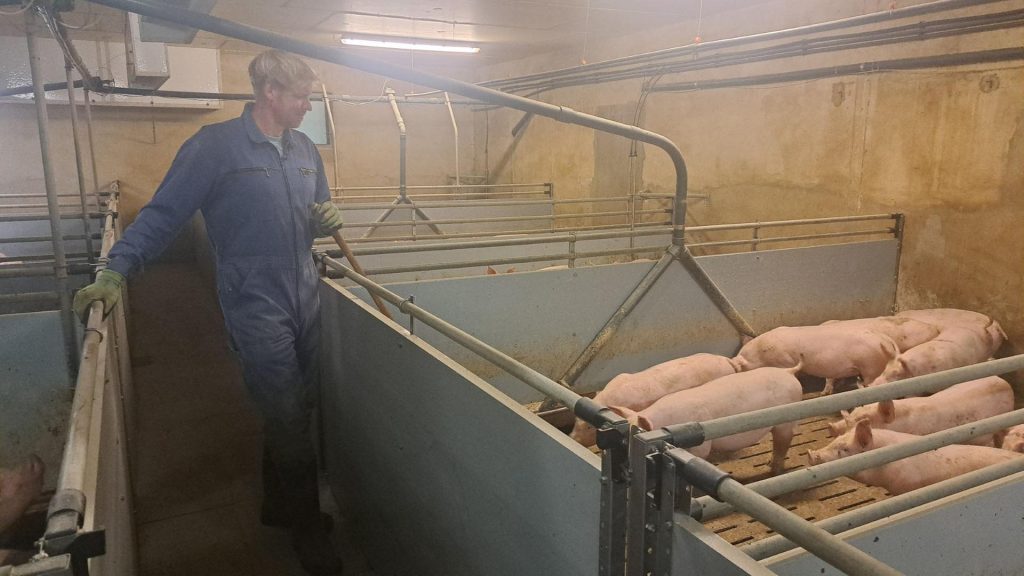
As the aroma of sizzling barbecue fills the air during this summer’s grilling season, German pork farmers are grappling with a bitter reality: financial losses that defy the usual seasonal boom. Heiko Schwarting, a pig farmer from Lower Saxony, laments the irony. ‘Every pig I raise right now costs me money,’ he says, reflecting on a 13% drop in revenue over just three weeks, despite a 4% rise in demand.
The root of this paradox lies in plummeting pork prices. According to Torsten Staack, managing director of the German Pig Farmers’ Association, the price per kilogram of pork has fallen by 20 cents since May, when it should have risen by at least the same amount. This price slump, coupled with a 16.7% year-on-year decrease in pork costs for consumers, has left farmers in a precarious position. While shoppers enjoy cheaper meat, producers are bearing the brunt of the financial strain.
A significant factor exacerbating the crisis is the outbreak of African swine fever in Spain, Europe’s largest pork producer. This has led to export restrictions, particularly to Asia, a key market for less desirable pork cuts such as feet, ears, and tails. With Spain unable to export, its surplus meat is flooding the European market, intensifying competition and driving prices down further. ‘A farmer raises an entire pig, not just the filet,’ Staack emphasizes, highlighting the challenge of finding buyers for all parts of the animal.
Adding to the woes is a shift in consumer preferences. Gesa Oetken, managing director of Inkoop supermarkets, notes a growing health trend favoring poultry over pork, perceived as a leaner option. Moreover, vegetarian and vegan alternatives are increasingly occupying grill space, with vegetables, cheese, and plant-based meat substitutes gaining popularity. While pork remains the most consumed meat in Germany, its dominance is waning.
Despite these challenges, there is a glimmer of hope. Farmers like Gerrit Asbrock, who prioritize higher animal welfare standards, are finding a niche market. Asbrock’s pigs, raised with more space, fresh air, and straw bedding, command higher prices. This shift towards sustainable farming practices may pave the way for a more resilient future for the industry, even as consumption patterns evolve.
The root of this paradox lies in plummeting pork prices. According to Torsten Staack, managing director of the German Pig Farmers’ Association, the price per kilogram of pork has fallen by 20 cents since May, when it should have risen by at least the same amount. This price slump, coupled with a 16.7% year-on-year decrease in pork costs for consumers, has left farmers in a precarious position. While shoppers enjoy cheaper meat, producers are bearing the brunt of the financial strain.
A significant factor exacerbating the crisis is the outbreak of African swine fever in Spain, Europe’s largest pork producer. This has led to export restrictions, particularly to Asia, a key market for less desirable pork cuts such as feet, ears, and tails. With Spain unable to export, its surplus meat is flooding the European market, intensifying competition and driving prices down further. ‘A farmer raises an entire pig, not just the filet,’ Staack emphasizes, highlighting the challenge of finding buyers for all parts of the animal.
Adding to the woes is a shift in consumer preferences. Gesa Oetken, managing director of Inkoop supermarkets, notes a growing health trend favoring poultry over pork, perceived as a leaner option. Moreover, vegetarian and vegan alternatives are increasingly occupying grill space, with vegetables, cheese, and plant-based meat substitutes gaining popularity. While pork remains the most consumed meat in Germany, its dominance is waning.
Despite these challenges, there is a glimmer of hope. Farmers like Gerrit Asbrock, who prioritize higher animal welfare standards, are finding a niche market. Asbrock’s pigs, raised with more space, fresh air, and straw bedding, command higher prices. This shift towards sustainable farming practices may pave the way for a more resilient future for the industry, even as consumption patterns evolve.
Drafted & Edited by Investigative Desk | AboMatrix