



Ebola Crisis Deepens Amid Aid Cuts

Daily Monitor
September 17, 2026
Ebola Crisis Deepens Amid Aid Cuts
Severe aid reductions are fueling the rapid spread of Ebola in the Democratic Republic of Congo, experts warn.
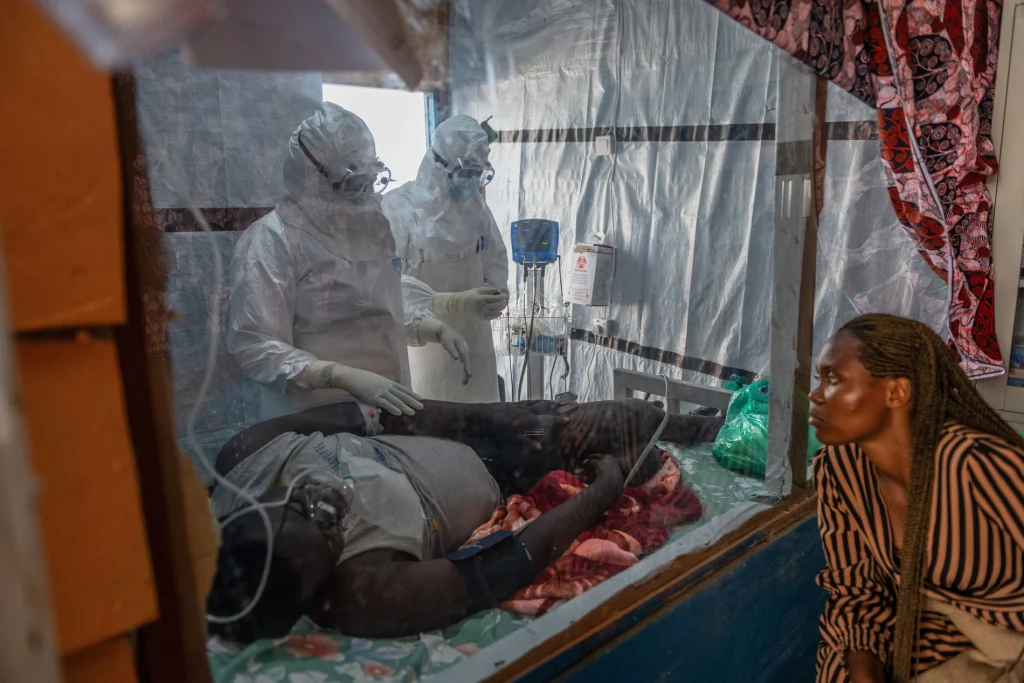
The Democratic Republic of Congo is grappling with a devastating Ebola outbreak, exacerbated by significant cuts to international aid programs. Experts have revealed that weakened health systems, compounded by geopolitical instability and budgetary constraints, have created fertile ground for the virus to spread unchecked. The World Health Organization (WHO) declared a health emergency in May after confirming a rare Bundibugyo strain of Ebola in the Ituri Province. Since then, over 1,100 individuals have been infected, with more than 300 fatalities recorded.
The outbreak unfolds against a backdrop of severe humanitarian challenges. Ituri Province, a region plagued by conflict between M23 rebels and the Congolese army, hosts over a million internally displaced persons living in overcrowded camps with poor sanitation. These conditions, coupled with a weakened global health infrastructure, have left the region ill-equipped to contain the virus. Observers have pointed to years of budget cuts in international development cooperation as a critical factor. Notably, the dismantling of the United States Agency for International Development (USAID) under former President Donald Trump disrupted essential health and prevention programs across Africa.
The International Rescue Committee (IRC) has highlighted the impact of these funding reductions. In March 2025, IRC was forced to scale back its operations in Ituri from five health zones to just two, severely limiting disease surveillance and response capabilities. Christoph Benn, a global health expert and co-founder of the Global Fund to Fight AIDS, Tuberculosis, and Malaria, emphasized that while outbreaks like Ebola are inevitable, the ability to respond effectively hinges on robust local health systems. He noted that Congo’s fragile infrastructure, further weakened by aid cuts, has left the country particularly vulnerable.
The ripple effects of these reductions extend beyond Congo. Neighboring Uganda, also affected by the outbreak, saw its health system collapse following the withdrawal of USAID and PEPFAR funding. Clinics shuttered overnight, leaving communities without essential services. Katja Roll, director at the Coalition for Epidemic Preparedness Innovations, underscored the importance of rapid response mechanisms in epidemic control. She lamented the invisible yet vital role of prevention programs, which often go unnoticed until their absence leads to catastrophic outcomes.
As the Ebola crisis unfolds, the global community faces urgent questions about the long-term consequences of neglecting health infrastructure in vulnerable regions. The lessons from Congo and Uganda serve as stark reminders of the interconnectedness of global health and the critical need for sustained investment in disease prevention and response.
The outbreak unfolds against a backdrop of severe humanitarian challenges. Ituri Province, a region plagued by conflict between M23 rebels and the Congolese army, hosts over a million internally displaced persons living in overcrowded camps with poor sanitation. These conditions, coupled with a weakened global health infrastructure, have left the region ill-equipped to contain the virus. Observers have pointed to years of budget cuts in international development cooperation as a critical factor. Notably, the dismantling of the United States Agency for International Development (USAID) under former President Donald Trump disrupted essential health and prevention programs across Africa.
The International Rescue Committee (IRC) has highlighted the impact of these funding reductions. In March 2025, IRC was forced to scale back its operations in Ituri from five health zones to just two, severely limiting disease surveillance and response capabilities. Christoph Benn, a global health expert and co-founder of the Global Fund to Fight AIDS, Tuberculosis, and Malaria, emphasized that while outbreaks like Ebola are inevitable, the ability to respond effectively hinges on robust local health systems. He noted that Congo’s fragile infrastructure, further weakened by aid cuts, has left the country particularly vulnerable.
The ripple effects of these reductions extend beyond Congo. Neighboring Uganda, also affected by the outbreak, saw its health system collapse following the withdrawal of USAID and PEPFAR funding. Clinics shuttered overnight, leaving communities without essential services. Katja Roll, director at the Coalition for Epidemic Preparedness Innovations, underscored the importance of rapid response mechanisms in epidemic control. She lamented the invisible yet vital role of prevention programs, which often go unnoticed until their absence leads to catastrophic outcomes.
As the Ebola crisis unfolds, the global community faces urgent questions about the long-term consequences of neglecting health infrastructure in vulnerable regions. The lessons from Congo and Uganda serve as stark reminders of the interconnectedness of global health and the critical need for sustained investment in disease prevention and response.
Drafted & Edited by Investigative Desk | AboMatrix