



The Role of Leadership in Migration Policy Crises

The Role of Leadership in Migration Policy Crises
⏱ 3 min read
Executive Summary
The German Federal President’s role, traditionally symbolic and unifying, has gained renewed relevance amidst contemporary crises. This briefing explores how the office’s moral authority and constitutional powers intersect with migration policy, offering critical insights into its potential to shape Germany’s response to asylum and integration challenges.
Strategic Context
Historical Context: The Office of the German Federal President
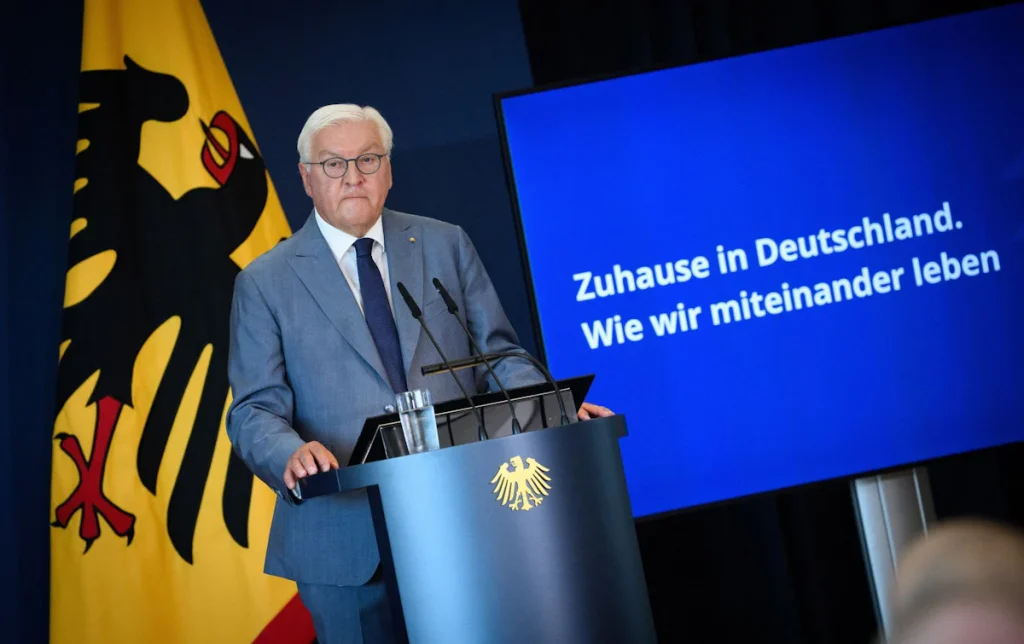
The German Federal President, as outlined in the Basic Law, serves as a figurehead of national unity, embodying the moral and constitutional integrity of the state. Unlike the Chancellor, the President is not directly elected by the populace but chosen by the Federal Assembly, ensuring a balance between symbolic representation and institutional legitimacy. Historically, figures such as Richard von Weizsäcker have elevated the office’s stature through their intellectual and moral contributions, emphasizing the President’s role as a guardian of democratic values.
In times of crisis, the President’s influence extends beyond ceremonial duties. From addressing constitutional challenges to advocating for societal cohesion, the office has demonstrated its capacity to act as a stabilizing force. This briefing examines how these attributes intersect with Germany’s migration and asylum policies, particularly in the face of growing political polarization and humanitarian pressures.
In-Depth Analysis
Policy Motivations: Balancing Authority and Symbolism
The Federal President’s ability to dissolve the Bundestag or veto legislation underscores the office’s latent constitutional power. While these mechanisms are rarely invoked, they represent a critical safeguard against political instability. In the context of migration policy, this authority could be pivotal in addressing legislative deadlocks or ensuring adherence to international human rights obligations.
Moreover, the President’s moral authority—manifested through public speeches and symbolic actions—plays a crucial role in shaping public discourse. For instance, during the European refugee crisis, presidential appeals for solidarity and empathy helped counteract xenophobic narratives, fostering a more inclusive national dialogue. This moral leadership is particularly significant as Germany grapples with the integration of asylum seekers and the broader challenges of demographic change.
Finally, the President’s role in representing Germany internationally offers a unique platform to advocate for cooperative migration frameworks. By leveraging diplomatic channels, the office can promote multilateral solutions to migration challenges, aligning national policies with broader European and global objectives.
Impact on Migrants
Legal and Social Implications for Migrants
The Federal President’s influence on migration policy, while indirect, carries profound implications for asylum seekers and refugees. By endorsing legislation that upholds human rights and integration initiatives, the President can ensure that Germany remains a beacon of humanitarian values. This is particularly relevant in the context of debates surrounding border controls, asylum procedures, and the distribution of refugees across EU member states.
Socially, the President’s moral leadership can help mitigate societal tensions and foster a culture of acceptance. Public appeals for unity and empathy, especially during crises, have the potential to counteract divisive rhetoric and promote community cohesion. This cultural shift is essential for the successful integration of migrants, enabling them to contribute meaningfully to German society.
Outlook & Conclusion
As Germany navigates the complexities of migration and asylum policy, the Federal President’s role as a unifying and moral authority becomes increasingly vital. By leveraging constitutional powers and moral leadership, the office can guide the nation toward policies that balance humanitarian obligations with societal cohesion. The future of migration policy in Germany will undoubtedly benefit from this nuanced and principled approach.

Prepared & Analyzed by: Migration Policy Unit | AboMatrix