



Germany’s Inflation Drops to 2.3% in June

Germany’s Inflation Drops to 2.3% in June
Germany’s inflation rate eased to 2.3% in June, driven by falling oil prices and temporary fuel tax cuts.
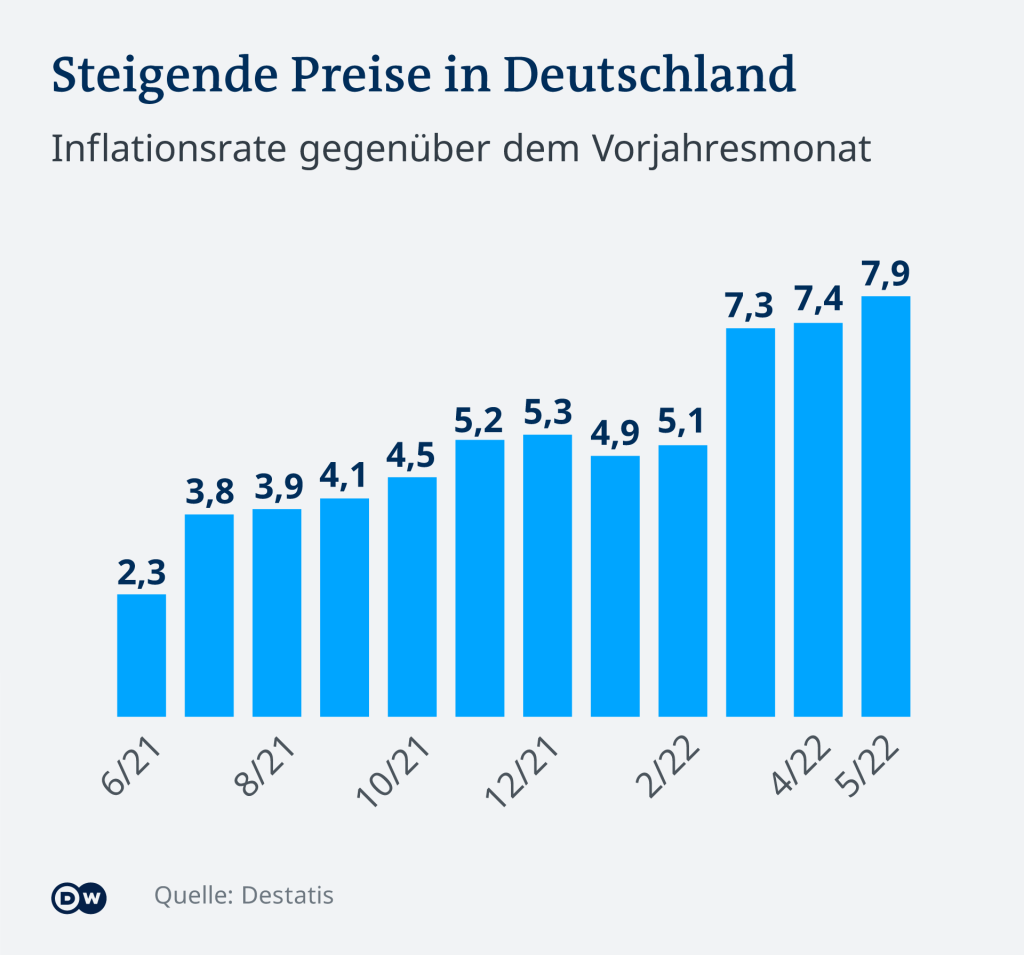
Germany’s inflation rate slowed significantly in June, dropping to 2.3% compared to the same month last year, according to preliminary data from the Federal Statistical Office. This marks a decline from 2.6% in May and 2.9% in April, signaling a continued easing of price pressures. The drop is attributed to falling global oil prices and the implementation of a temporary fuel tax rebate, which reduced costs for consumers and businesses.
Energy prices, which had surged earlier this year due to geopolitical tensions, rose by just 3.4% in June compared to 6.6% in May. The easing of the Iran conflict has been a key factor in stabilizing global oil prices, with some experts noting that prices have returned to pre-crisis levels. Felix Schmidt, an economist at Berenberg Bank, stated, ‘The relaxation in the Iran conflict has recently brought global oil prices back to pre-crisis levels. This development is reflected in Germany’s inflation figures.’
The fuel tax rebate, introduced for May and June to alleviate the burden of high energy costs, also played a role in curbing inflation. The German central bank estimates that the rebate reduced inflation by approximately 0.25 percentage points. Meanwhile, food prices remained stable, increasing by just 0.4% year-on-year, while services such as insurance and travel saw a 3.1% rise, unchanged from May. Core inflation, which excludes volatile food and energy prices, held steady at 2.5%.
The easing inflationary pressures come as a relief to the European Central Bank (ECB), which had raised its key interest rate in June for the first time in nearly three years, from 2.0% to 2.25%. The slowdown in inflation could influence the ECB’s decision on whether to proceed with another rate hike in July. ‘The inflation wave triggered by the Iran conflict appears to be subsiding,’ Schmidt added, suggesting that the ECB may have room to pause further monetary tightening.
While the latest figures indicate a positive trend, experts caution that external factors, such as geopolitical developments and energy market volatility, could still impact inflation in the coming months. For now, the data offers a glimmer of hope for consumers and policymakers alike, as Germany navigates a challenging economic landscape.
Edited and Prepared by AboMatrix