



The AfD’s Victory: A Genuine Governing Experience or a Political Reality Check?

The AfD’s Victory: A Genuine Governing Experience or a Political Reality Check?
The AfD’s Victory: A Genuine Governing Experience or a Political Reality Check?
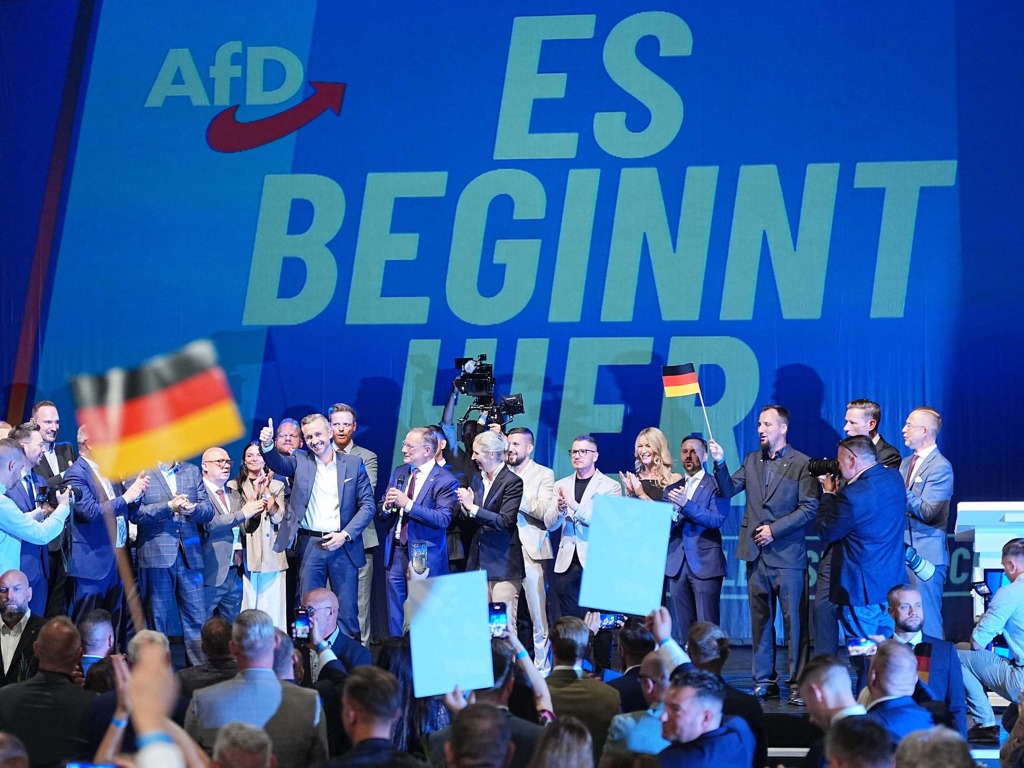
The rapid rise of the “Alternative for Germany” (AfD) and its remarkable electoral victory in a district whose majority has historically and culturally leaned toward its platform has triggered a political earthquake that can no longer be dismissed as a passing headline. It has evolved into a reality that is forcefully imposing itself on both the state and society. This victory confronts us with a fundamental question echoing today in political salons and everyday street conversations alike: Is what happened the natural result of genuine public anger and the accumulation of past policy failures? Or is there an undeclared “political maneuver” by the traditional democratic establishment, intended to leave this district as an “experimental field” where the party is placed face to face with the complexities of governance, exposing its true capabilities to the public?
In both cases, the outcome appears clear to all: the era of sitting comfortably on the opposition benches is over. The party that built its popularity on directing criticism and raising its voice now finds itself compelled to make the transition from the position of rejection to the platform of direct governance and accountability before the citizens.
A Historic Opportunity: From Rejection to Building
Should the party assume local governing responsibilities and begin managing the district’s affairs, it will stand before a historic opportunity that rarely recurs. The real challenge today is no longer about mobilizing crowds or directing biting criticism at the federal government’s policies, but about demonstrating actual governing capability.
The citizen who gave this party their vote now expects tangible improvements that touch their daily life. Voters want real projects that raise the district’s economic level, create new jobs, and improve the quality of schools, hospitals, and infrastructure. If the party succeeds in transforming its grand promises into concrete reality, it will send a powerful and convincing message to the rest of the German population in other states. The essence of this message: the party is not merely a vocal phenomenon or a movement that feeds on anger, but a political force with actionable plans. Such success would break the psychological barrier among many undecided voters and grant the party a genuine political and administrative legitimacy it has always lacked.
The Time Factor: Slogans Alone Cannot Govern a State
However, the road to such success is far from smooth. The biggest challenge facing the party today—and its supporting base—is the factor of time and the test of competence in the field. The passionate speeches and slogans that focus on complex issues like immigration and asylum may undoubtedly be excellent tools for generating enthusiasm during elections. But let us agree: these slogans lose their luster and impact entirely when the party must sit at desks to manage municipal affairs and discuss budgets. Hostile slogans are not development projects; they neither build a factory nor pave a road.
Therefore, it is the great responsibility of the party’s supporters to help it channel this momentum into organized institutional work and projects that genuinely serve the residents. Failure to deliver realistic solutions will quickly reveal to the citizens that the electoral promises were merely a bridge to power, and that the party lacks the genuine vision required for building.
The Test of Failure: A Harsh Lesson in Political Realism
On the other hand, this access to power carries significant risks, particularly for those who believe that politics can be managed through impulsive decisions. If the party fails to improve conditions, or if its hardline policies create an environment that frightens investors and leads to economic stagnation or isolation of the district, this experiment will turn into a political nightmare.
This potential failure would be a harsh and direct lesson for voters who wagered on this option as a lifeline. It will become clear to all that quick-fix solutions and rigid positions do not succeed in the complex world of politics, which demands flexibility and coalition-building. More importantly, this failure would become a living example that rival parties will use to deter voters across the rest of Germany, telling them: “Look at what happened there—don’t repeat the same mistake.” This will inevitably curtail the party’s ambitions and prevent its future expansion.
The Responsibility of Established Parties and Restoring Public Trust
Amid these developments, the traditional political parties cannot afford to sit back and settle for the role of spectator, waiting for their opponent to fall. Banking solely on the right wing’s failure is not a mature strategy and does not solve the problems that drove voters to protest in the first place.
The opposing forces must prepare now for all scenarios. The most important step is to return to the streets and engage in direct dialogue with the people. The deep-rooted causes that have made a broad segment of citizens feel economically and socially marginalized must be understood. Convincing alternatives and solutions must be offered that address people’s real needs. These forces must also be ready to contain any fallout from the right wing’s failure, to stabilize the situation and prevent society from sliding into deeper divisions. True preparedness proves that democracy is capable of reforming itself through actual work—not through theorizing behind closed doors.
Conclusion
We stand at a decisive political juncture that represents a genuine test for all parties involved. Time is the fair judge that will reveal the course of events. Either we will witness the political maturation of a party that has long relied on the language of rejection, proving its ability to shoulder the responsibilities of governance; or we will witness an administrative failure that redraws the political map and gives the established forces an opportunity to awaken and return to the streets with a realistic discourse that places the citizens’ interests at the forefront.
By: Abubakar Al-Romoh