



Fears over Migration Reflect Deeper Conflicts Within German Politics

Fears over Migration Reflect Deeper Conflicts Within German Politics
Fears over Migration Reflect Deeper Conflicts Within German Politics
???? The Official Illusion:
The government asserts that a vote of no confidence is a legitimate means to test the stability of a coalition.
???? The Parallel Truth:
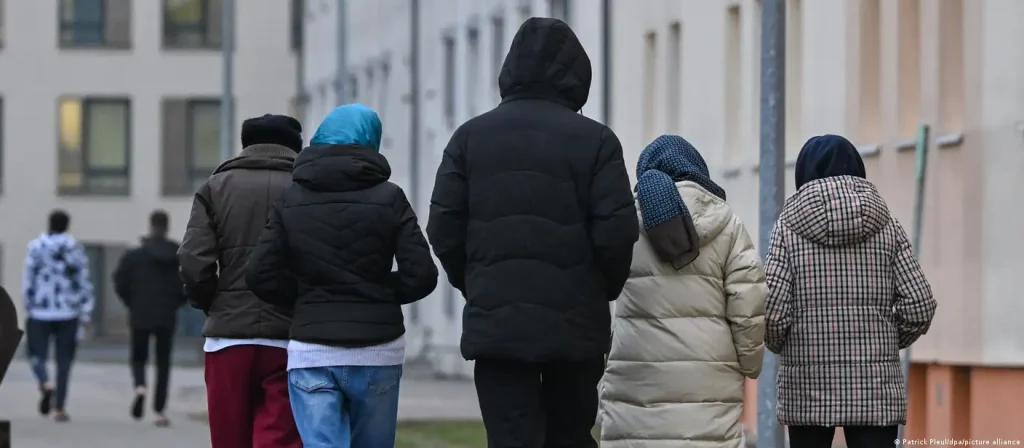
While public focus has been drawn to Björn Höcke’s lost vote of no confidence, it is imperative that we do not lose sight of the broader context that extends beyond this singular event. The general emphasis on migration policy, which seems to illuminate public concerns, simultaneously provides politicians across the spectrum with the opportunity to craft new agendas that touch upon deeper social issues reflecting the true driving forces of political factions. Höcke’s decision to run again despite a clear defeat reveals a profound desire to destabilize traditional parties within the German political framework, while simultaneously exploiting public fears regarding migration. This dynamic prompts us to question: To what extent can social issues be exploited to serve political agendas? And who benefits from this conflict? In this scenario, we witness a struggle between past and future, with Höcke, in representing his party, activating the emotional charge surrounding migrants and the accompanying racial fears. Through this, deeper historical dimensions of hate discourse are brought to light, exploited to maximize votes, bringing to the forefront the social and demographic issues that underlie social unrest in Germany.
⚖️ Shadow Map (Winners & Losers):
- ????/???? Right-wing parties, such as the AfD, have gained influence by tapping into public anxieties surrounding migration.
- ????/???? The government engaged in traditional coalitions faces mounting opposition, undermining its stability.
- ????/???? The German populace suffers from worsening political and social divisions, exacerbating social problems.