



Legal and Humanitarian Implications of Polish Law on Asylum Rights at the Border: A Critical Analysis

Legal and Humanitarian Implications of Polish Law on Asylum Rights at the Border: A Critical Analysis
Executive Summary
This paper critically examines the recent amendments to Polish law regarding asylum rights at the border, particularly in the context of the ongoing instrumentalisation of migration by Belarus. The analysis highlights the legal, social, and political dimensions of these changes, emphasizing the implications for human rights and international obligations. The findings reveal a complex interplay between national security concerns and the protection of asylum seekers, raising significant questions about the compatibility of Polish legislation with European Union standards and international human rights law.
Context & Background
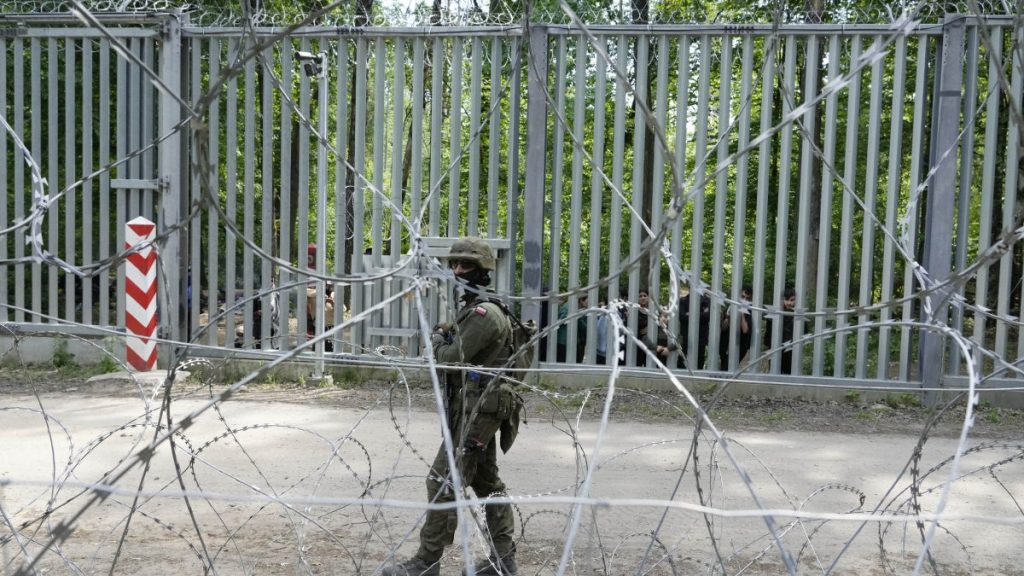
The Polish government has enacted a series of legal amendments aimed at restricting the right to asylum at its borders, particularly in response to perceived threats from Belarusian authorities. Since July 2021, Poland has faced a significant increase in attempts by migrants to cross its border, which the Polish Border Guard attributes to organized efforts by Belarus to destabilize the country. This situation has been exacerbated by the geopolitical context of Russia’s invasion of Ukraine and the subsequent visa-free travel agreement between Russia and Belarus, which has facilitated the movement of migrants towards Poland. In response, the Polish government has implemented a buffer zone along the border and introduced legal measures that allow for the suspension of asylum rights, citing national security as the primary justification for these actions.
The legal framework governing asylum in Poland has undergone substantial changes, particularly with the introduction of the law on 21 February 2025, which allows for temporary restrictions on the right to apply for international protection. This law has been met with widespread criticism from human rights organizations and legal experts, who argue that it undermines Poland’s obligations under international law, including the principle of non-refoulement. The amendments have raised concerns about the potential for pushback practices and the lack of adequate legal protections for vulnerable groups, including unaccompanied minors and individuals at risk of serious harm. As the situation at the Polish-Belarusian border continues to evolve, the implications of these legal changes for both migrants and Poland’s international standing remain a critical area of concern.
Deep Analysis
The legal amendments introduced by the Polish government represent a significant shift in the approach to asylum seekers at the border, reflecting a broader trend of prioritizing national security over humanitarian considerations. The new law allows for the temporary suspension of asylum applications under specific conditions related to the instrumentalisation of migration, which is defined as actions by neighboring states that facilitate unlawful border crossings. While the government argues that these measures are necessary to protect national security, critics contend that they effectively legalize pushbacks and violate international human rights obligations. The vagueness of terms such as ‘immediately’ in the context of asylum applications further complicates the legal landscape, potentially allowing for arbitrary enforcement and the denial of access to asylum for those in need.
Moreover, the introduction of exceptions for certain vulnerable groups, such as unaccompanied minors and pregnant women, does not adequately address the broader implications of the law. The stipulation that applications will not be accepted if individuals have used coercive measures raises questions about the treatment of those who may be fleeing violence or persecution. This legal framework risks creating a two-tiered system of asylum, where only those who can navigate the complexities of border enforcement are granted access to protection. The potential for human rights violations is exacerbated by the lack of transparency and oversight in the implementation of these laws, as evidenced by reports of pushbacks and inadequate medical care for migrants at the border.
The political context surrounding these legal changes is equally significant. The Polish government’s actions have been framed as a necessary response to external threats, tapping into nationalist sentiments and public fears regarding migration. This narrative has been bolstered by the portrayal of migrants as potential security risks, which has resonated with segments of the Polish population. However, this approach risks undermining Poland’s commitment to international human rights standards and its reputation within the European Union. The ongoing legal challenges, including cases before the European Court of Human Rights, will likely shape the future of asylum policy in Poland and may compel the government to reconsider its current stance.
In light of these developments, it is crucial to assess the implications for the broader European asylum system. The situation at the Polish-Belarusian border is emblematic of a growing trend among EU member states to adopt restrictive asylum policies in response to perceived security threats. This raises fundamental questions about the future of the Common European Asylum System and the extent to which member states are willing to uphold their commitments to protect the rights of asylum seekers. The interplay between national security and human rights protection will continue to be a contentious issue, necessitating a reevaluation of policies that prioritize border control over humanitarian obligations.
Methodology
This analysis is based on a review of primary policy documents.
Anchor Source: eumigrationlawblog.eu
Recommendations
- Reassess the legal framework governing asylum applications to ensure compliance with international human rights obligations.
- Implement transparent procedures for asylum seekers at the border, including access to legal assistance and adequate medical care.
- Enhance training for border guards and law enforcement officials on human rights standards and the treatment of asylum seekers.
- Engage in dialogue with international human rights organizations to address concerns regarding pushbacks and the treatment of migrants.
- Establish independent oversight mechanisms to monitor the implementation of asylum policies and ensure accountability for human rights violations.
Conclusion
In conclusion, the recent amendments to Polish law restricting the right to asylum at the border represent a critical juncture in the intersection of national security and human rights. While the Polish government asserts that these measures are necessary to address external threats, the implications for asylum seekers and Poland’s adherence to international obligations are profound. As the situation continues to evolve, it is imperative that Poland reconsiders its approach to asylum, ensuring that the protection of human rights remains at the forefront of its border policies.