



Legal and Humanitarian Implications of Polish Law Restricting Asylum Rights at Borders

Legal and Humanitarian Implications of Polish Law Restricting Asylum Rights at Borders
Executive Summary
This paper critically examines the recent amendments to Polish law that restrict the right to asylum at the borders, particularly in the context of the ongoing geopolitical tensions with Belarus and Russia. The analysis highlights the legal, social, and political dimensions of these changes, emphasizing their implications for human rights and international obligations. The findings indicate that while the Polish government justifies these measures as necessary for national security, they raise significant concerns regarding compliance with international human rights standards, particularly the principle of non-refoulement. The paper concludes with recommendations for policy reforms that align Poland’s asylum practices with its international commitments.
Context & Background
Since July 2021, Poland has faced increasing pressure at its borders due to the instrumentalisation of migration by Belarus, which has been exacerbated by the geopolitical fallout from the 2020 Belarusian presidential election and the ongoing conflict in Ukraine. The Polish government has responded to these challenges by implementing stringent border control measures, including the establishment of buffer zones and the introduction of laws that limit the right to seek asylum. The situation has been characterized by a significant increase in illegal border crossings, with the Polish Border Guard reporting over 110,000 attempts between July 2021 and November 2024. This context has led to a heightened sense of urgency within the Polish government to protect national security, which has been framed as a justification for the recent legal amendments restricting asylum rights.
The amendments to the Act on Granting Protection to Foreigners, particularly the law enacted on 21 February 2025, represent a significant shift in Poland’s approach to asylum seekers. The new legal framework allows for the temporary suspension of the right to apply for international protection under specific circumstances deemed as instrumentalisation of migration. This legal change has been met with widespread criticism from human rights organizations and legal experts, who argue that it undermines Poland’s obligations under international law, including the principle of non-refoulement, which prohibits the return of individuals to countries where they may face persecution or serious harm. The implications of these legal changes extend beyond Poland, affecting the broader European Union’s approach to migration and asylum, particularly in the context of rising nationalism and anti-immigrant sentiment across member states.
Deep Analysis
The legal amendments introduced by Poland raise significant concerns regarding their compatibility with international human rights obligations. The principle of non-refoulement, enshrined in the 1951 Refugee Convention and other international treaties, mandates that states must not return individuals to countries where they face threats to their life or freedom. The new Polish law, however, allows for the dismissal of asylum applications based on vague criteria related to national security and instrumentalisation, which could lead to the unlawful return of individuals to dangerous situations. This legal framework not only contravenes Poland’s international commitments but also sets a concerning precedent for other EU member states grappling with similar migration challenges.
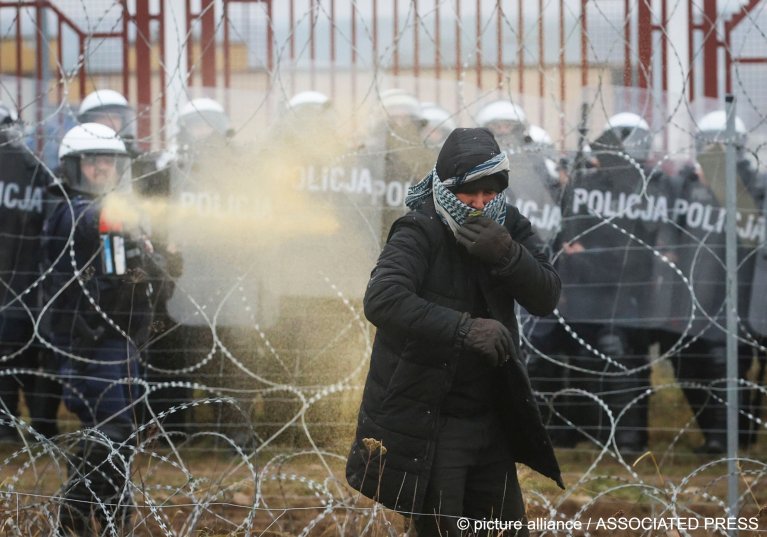
Moreover, the social implications of these legal changes cannot be overlooked. The introduction of buffer zones and restrictions on asylum applications has resulted in a humanitarian crisis at the Polish-Belarusian border, with reports of migrants facing violence, pushbacks, and inadequate access to basic necessities such as food and medical care. The Helsinki Foundation for Human Rights has documented numerous cases of individuals suffering from severe health issues, including dehydration and hypothermia, as they are forcibly returned to Belarus without proper legal procedures. This situation reflects a broader trend of dehumanization and marginalization of migrants, which is exacerbated by the rhetoric employed by Polish authorities that frames migrants as threats to national security rather than individuals in need of protection.
Politically, the amendments to asylum law have been positioned within the context of rising nationalism and anti-immigrant sentiment in Poland. The ruling party has leveraged the narrative of national security to justify increasingly restrictive measures, appealing to public fears regarding migration and external threats. This strategy not only consolidates political support domestically but also aligns with a broader trend observed in several EU countries where migration is politicized to garner electoral gains. However, this approach risks alienating Poland from its European partners and undermining the EU’s collective commitment to human rights and humanitarian principles.
In light of these developments, it is crucial to consider the potential long-term consequences of Poland’s restrictive asylum policies. The legal changes may lead to increased tensions between Poland and the EU, particularly as the European Court of Human Rights deliberates on cases challenging the legality of pushbacks and the treatment of asylum seekers at the Polish border. Furthermore, the erosion of asylum rights in Poland could embolden other member states to adopt similar measures, thereby undermining the integrity of the Common European Asylum System and the fundamental rights of individuals seeking refuge within the EU.
Methodology
This analysis is based on a review of primary policy documents.
Anchor Source: eumigrationlawblog.eu
Recommendations
- Reinstate the principle of non-refoulement in Polish asylum law to ensure compliance with international human rights obligations.
- Implement transparent and fair asylum procedures that allow for the timely processing of applications without undue restrictions.
- Enhance cooperation with international organizations, such as UNHCR, to ensure the protection of migrants and asylum seekers at the border.
- Conduct regular assessments of border control measures to ensure they do not violate human rights standards.
Conclusion
In conclusion, the recent amendments to Polish law restricting the right to asylum at borders represent a troubling shift in the country’s approach to migration and human rights. While framed as necessary for national security, these measures pose significant risks to the protection of vulnerable individuals seeking refuge. It is imperative for Poland to align its asylum practices with international obligations and to prioritize the humanitarian needs of migrants, thereby reaffirming its commitment to human rights and the principles of the European Union.