



The Implications of EU-Backed Migration Crackdowns in Mauritania: A Critical Examination
This briefing analyzes the recent EU-backed migration crackdowns in Mauritania, which have led to the detention and deportation of thousands of migrants. The policy aim...

The Implications of EU-Backed Migration Crackdowns in Mauritania: A Critical Examination
⏱ 4 min read
Executive Summary
This briefing analyzes the recent EU-backed migration crackdowns in Mauritania, which have led to the detention and deportation of thousands of migrants. The policy aims to curb Atlantic migration routes to Europe but raises significant concerns regarding human rights violations and the socio-economic impacts on affected populations. The crackdown has instilled fear among migrants, limiting their ability to engage in daily activities and exacerbating their vulnerability.
Strategic Context
Mauritania has historically been a transit country for migrants seeking to reach Europe, particularly those from sub-Saharan Africa. The nation’s strategic location along the Atlantic migration route has made it a focal point for European Union (EU) efforts to manage migration flows. In recent years, the EU has intensified its collaboration with Mauritanian authorities, providing financial and logistical support to enhance border control measures aimed at reducing the number of migrants attempting to reach Europe. This partnership reflects the EU’s broader strategy of externalizing its migration management to third countries, often at the expense of migrants’ rights and welfare.
The political landscape in Mauritania has been marked by a complex interplay of governance challenges, economic instability, and social unrest. The government has faced criticism for its handling of human rights issues, particularly concerning the treatment of migrants and refugees. The recent crackdowns can be seen as a response to both domestic pressures to address illegal migration and external pressures from the EU to demonstrate progress in managing migration flows. However, this approach raises ethical questions about the prioritization of border security over humanitarian considerations.
Deep Analysis
The EU-backed crackdowns in Mauritania are indicative of a broader trend in European migration policy, which increasingly emphasizes deterrence over protection. By supporting the Mauritanian government in its efforts to detain and deport migrants, the EU is effectively outsourcing its migration challenges, often without adequate safeguards for the rights of those affected. The conditions under which migrants are detained have been reported as poor, raising serious concerns about the treatment of individuals who are often fleeing dire circumstances in their home countries. This policy approach not only undermines the EU’s commitment to human rights but also risks exacerbating the vulnerabilities of migrants.
Furthermore, the political motivations behind these crackdowns cannot be overlooked. The EU’s focus on reducing migration flows is driven by a desire to maintain domestic political stability and respond to rising anti-immigrant sentiments among its member states. By demonstrating a commitment to controlling migration, the EU aims to placate domestic constituencies that view migration as a threat. However, this short-term political calculus fails to address the root causes of migration, such as conflict, poverty, and climate change, which continue to drive individuals to seek better opportunities abroad.
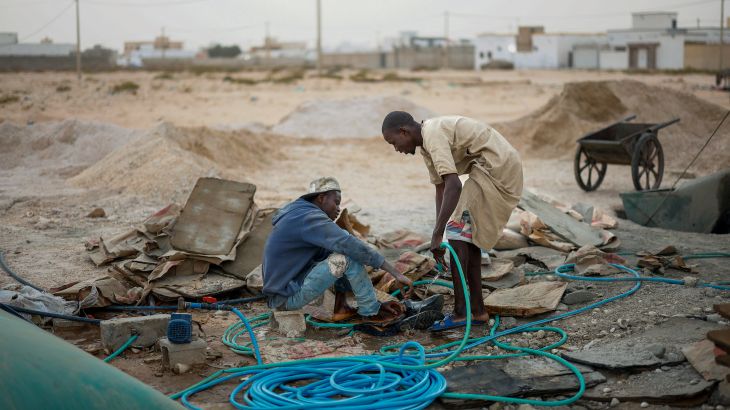
The impact of these policies extends beyond immediate deportations. The fear instilled in the migrant community in Mauritania has led to a significant reduction in their ability to engage in daily economic activities, such as street work, which many rely on for survival. This not only affects the migrants themselves but also has broader implications for the local economy, as their absence can lead to decreased economic activity in urban areas. The reliance on punitive measures rather than comprehensive solutions to migration challenges reflects a failure to engage with the complexities of migration dynamics in the region.
Impact on Migrants
The direct legal impacts of the EU-backed crackdowns on migrants in Mauritania are profound. Many individuals have been detained without due process, facing arbitrary detention and deportation to remote borders. This undermines their legal rights and exposes them to further risks, including violence and exploitation in transit countries. The lack of legal protections and the fear of deportation create an environment where migrants are unable to seek assistance or advocate for their rights, leaving them vulnerable to abuse.
Socially, the repercussions of these crackdowns are equally severe. The pervasive fear among migrants has led to a significant decline in their quality of life, as they are too afraid to engage in daily activities or seek employment. This not only affects their mental and physical well-being but also disrupts community cohesion, as migrants become isolated and marginalized. The long-term implications of such policies could lead to a cycle of poverty and instability, further complicating the migration landscape in Mauritania and beyond.
Outlook & Conclusion
Looking ahead, the EU must reassess its approach to migration management in Mauritania and similar contexts. A shift towards policies that prioritize human rights, protection, and integration is essential to address the root causes of migration and to foster a more humane and effective migration system. Without such a shift, the current trajectory of punitive measures will likely result in further suffering for migrants and continued instability in the region.
Anchor Source: aljazeera.com | Analyzed by AboMatrix AI Engine