



Evolving Threats and Responses: European Counter-Terrorism in 2026

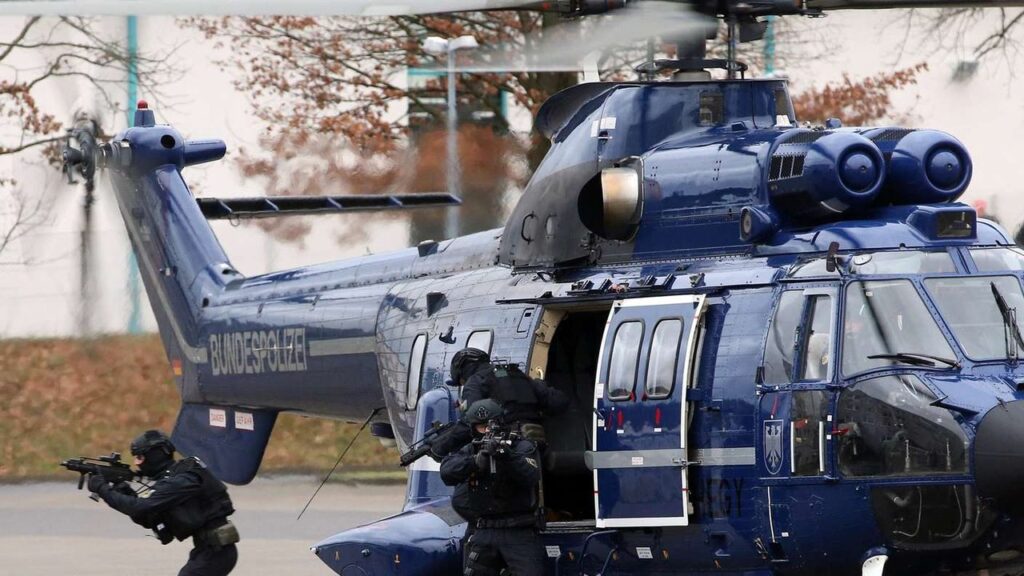
Evolving Threats and Responses: European Counter-Terrorism in 2026
A comprehensive analysis of how European security services assess and respond to the persistent and evolving terrorist threat.
Executive Summary
This case study examines the 2026 ICCT report on how European security services perceive and address terrorism. The analysis highlights the persistence of jihadi terrorism, the rise of ideological fluidity, and the growing challenge of state-linked hybrid threats. It also explores the evolution of national threat levels, the prioritization of critical infrastructure protection, and the adaptation of counter-terrorism strategies through legislative and financial measures.
1. Shifting National Threat Levels Across the European Union
The 2026 ICCT report underscores the relative stability of terrorism threat levels across the European Union, with national assessments remaining broadly consistent with previous years. Drawing on 41 official reports from 23 Member States, the study reveals that the terrorist threat is generally more acute in Western Europe than in Central and Eastern Europe. For instance, Finland transitioned from a four-point to a five-point threat scale in 2025, aligning with international standards to enhance flexibility in threat assessment. Conversely, Sweden reduced its threat level from 4 to 3 out of 5, citing a decreased risk of domestic Islamist attacks. These adjustments reflect nuanced shifts in national threat perceptions, influenced by both domestic and transnational factors.
The report highlights that six Western European countries maintained high threat levels in 2025, despite a decline in domestic attacks in some cases, such as France. This persistence is attributed to the transnational nature of the threat, with successful attacks in neighboring countries influencing national threat assessments. Additionally, the rapid radicalization across various forms of terrorism has compelled intelligence services to adopt a more holistic approach to threat evaluation. These developments underscore the complexity of maintaining a unified European counter-terrorism strategy amidst diverse national contexts and evolving security landscapes.
2. The Dominance of Jihadi Terrorism and Emerging Ideological Fluidity
Jihadi terrorism continues to dominate as the principal threat across Europe, as noted in the ICCT report. This form of terrorism remains the most frequently prioritized concern in national security assessments. However, right-wing extremism (RWE) has emerged as a persistent secondary threat, characterized by its decentralized and networked online ecosystems that propagate nationalism, racism, antisemitism, and conspiracy theories. These digital platforms not only facilitate the spread of extremist ideologies but also enable recruitment and mobilization for political violence and terrorism.
A notable trend identified in the report is the increasing ideological fluidity within violent extremism. Traditional categorizations are being challenged by the rise of anti-government extremism, nihilistic violent extremism, and hybrid forms that defy conventional labels. Individuals are observed to shift between ideological affiliations, often driven by personal grievances or a fascination with violence rather than coherent ideological commitments. This blurring of boundaries complicates the task of security services, as it demands a more nuanced understanding of the motivations and networks behind extremist activities.
| Country | Threat Level | Primary Threat Type | Key Response Measures |
|---|---|---|---|
| Finland | 3/5 | Jihadi terrorism | Switched to a five-point threat scale for flexibility. |
| Sweden | 3/5 | Jihadi terrorism | Decreased threat level due to reduced Islamist risk. |
| Germany | Heightened (unquantified) | Jihadi and right-wing extremism | Highlighted lone actor threats and hybrid risks. |
| Latvia | Low | Mixed extremism | Detained individuals self-training for terrorism. |
3. The Growing Role of State-Linked Hybrid Threats and Infrastructure Vulnerabilities
The ICCT report identifies state-linked hybrid threats as a significant and growing concern for European security services. Russia and Iran are highlighted as key actors in this domain, with activities that blur the lines between terrorism, organized crime, and state-sponsored operations. Russia's involvement in the crime-terror nexus and Iran's use of proxy networks to target Jewish, Israeli, and dissident interests in Europe exemplify this trend. These activities complicate the counter-terrorism landscape, as they often involve deniable operatives and covert actions that are difficult to attribute and counter.
Critical infrastructure has also emerged as a focal point for security concerns. The report underscores the increasing risk of sabotage, espionage, cyberattacks, and pre-positioning by hostile states. These threats extend the scope of counter-terrorism efforts beyond traditional terrorist organizations to include resilience against state-linked and hybrid activities. For instance, Germany's Interior Minister highlighted the heightened terrorist threat in 2025 following the arrest of a Syrian jihadi suspect, emphasizing the need for vigilance against both traditional and hybrid threats. Similarly, Latvia's detention of individuals self-training for terrorism, linked to increased migration flows, illustrates the multifaceted nature of the current threat landscape.
4. Innovative Legislative and Financial Measures in Counter-Terrorism
European Union Member States are increasingly adapting their counter-terrorism strategies to address the evolving threat landscape. The ICCT report highlights significant legislative advancements aimed at enhancing the capacity of security services. These include measures to strengthen powers related to the monitoring and removal of terrorist content online, improve data-sharing mechanisms, and regulate crypto-assets to disrupt terrorist financing. Such initiatives reflect a broader trend towards leveraging technology and legal frameworks to counter the decentralization and digital mediation of modern terrorism.
The report also points to the importance of financial disruption as a key component of counter-terrorism strategies. Efforts to combat money laundering and terrorist financing have been intensified, with Member States adopting stricter controls and greater international collaboration. For example, Portugal's Annual Internal Security Report emphasized the role of financial measures in addressing the threat of Islamist international terrorism, which remains a significant concern for the country. These developments underscore the necessity of a multi-faceted approach that integrates legislative, financial, and operational measures to effectively counter the diverse and evolving threats facing Europe.
Concluding Assessment
The 2026 ICCT report underscores the persistent and evolving nature of the terrorist threat in Europe, characterized by ideological fluidity, low-complexity attacks, and state-linked hybrid activities. While jihadi terrorism remains the primary concern, the rise of right-wing extremism and the blurring of ideological lines demand a more nuanced and integrated counter-terrorism approach. Legislative advancements and financial disruption measures are vital, but the growing complexity of threats necessitates enhanced intelligence-sharing, cross-sector collaboration, and adaptive strategies. Policymakers must prioritize resilience and flexibility to address the multifaceted challenges of modern terrorism effectively.
Primary Sources & References
- International Centre for Counter-Terrorism (ICCT) (2026-09-18): In Their Eyes: How European Security Services Look at Terrorism and Counter-Terrorism, 2026 Edition [PDF]
- Peace Research Institute Frankfurt (PRIF / HSFK): Emerging Technologies – Changing the Dynamics of Peace and Security? How Emerging Technologies Shape both Battlefields and Arms Control