



Disruption by Left MPs in Bundestag Over Ex-Mossad Chief Visit Draws Sanctions

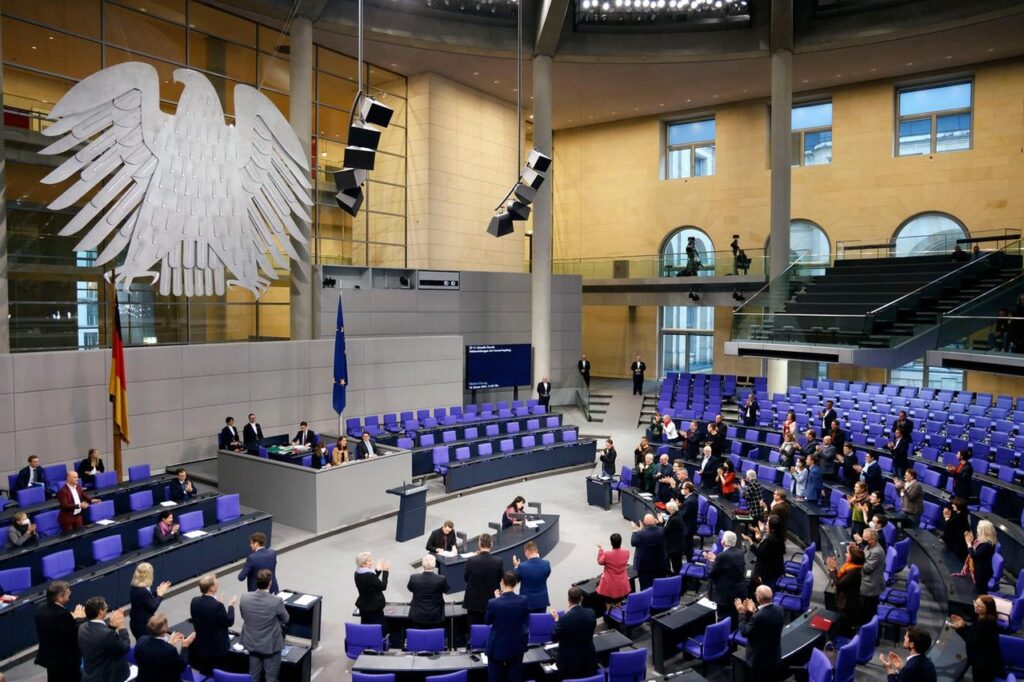
Disruption by Left MPs in Bundestag Over Ex-Mossad Chief Visit Draws Sanctions
Disruption by Left MPs in Bundestag Over Ex-Mossad Chief Visit Draws Sanctions
🔹 Official Context & Stated Position:
Two members of the Die Linke party in the Bundestag staged a blockade to disrupt an event featuring former Mossad chief David Barnea. Bundestagspräsidentin Julia Klöckner has announced consequences, including monetary penalties for those involved. The incident has drawn significant criticism across the political spectrum, with potential implications for parliamentary decorum.
🔍 In-Depth Analytical Assessment:
The decision by Die Linke MPs to block access to an event hosting former Mossad chief David Barnea represents a significant incident highlighting tensions within Germany’s democratic institutions. The Bundestag, as a central venue for dialogue and debate, requires strict adherence to procedural norms to ensure inclusivity and respect for differing views. The disruption has been criticized widely, as it undermines the norms of parliamentary engagement and freedom of expression, both essential to Germany’s democratic values as enshrined in the Grundgesetz (Basic Law). This action risks isolating Die Linke further, potentially damaging their position as a coalition partner at both regional and federal levels.
Moreover, this incident is not occurring in a vacuum. Germany has a complex relationship with Israel, rooted in historical accountability and present-day geopolitical considerations. Hosting a former Mossad chief in the Bundestag could symbolically reinforce Germany’s commitment to its strategic and moral partnership with Israel. The protest actions by these MPs—while likely intended to criticize Israeli policies—might be perceived as diminishing Germany’s fragile political unity in the face of rising global and domestic challenges, such as increased geopolitics around antisemitism and its condemnation.
From a practical perspective, this also raises questions about institutional safeguards within German democracy. Ensuring constructive opposition while protecting democratic processes and open dialogue demonstrates the delicate balance that Bundestagspräsidentin Klöckner must navigate as she proceeds with potential sanctions. Should the situation escalate, there may be legislative reforms focusing on the conduct of MPs and disciplinary actions within the Bundestag.
Fundamentally, this incident may prompt broader societal debates on what constitutes acceptable forms of protest in democratic systems versus acts that hinder institutional integrity. It forces Germany’s political class to introspect on maintaining the bounds of proportionality in expressing dissent while respecting the core principles of free speech and engagement.
⚖️ Socio-Political & Institutional Impact:
- ▪ Julia Klöckner: Seen as a strong leader enforcing order in the Bundestag.
- ▪ Germany’s parliamentary code: Under scrutiny; potential reforms and tightening of rules could follow.
- ▪ Die Linke: Further isolation and reputational damage may lead to declining coalition potential.