



Debate Over Amendments to Hessischer Rundfunk Law in Wiesbaden

Debate Over Amendments to Hessischer Rundfunk Law in Wiesbaden
The Hessian state parliament is discussing proposed changes to the Hessischer Rundfunk law, including reduced radio programming, stricter journalistic standards, and salary caps for executives.
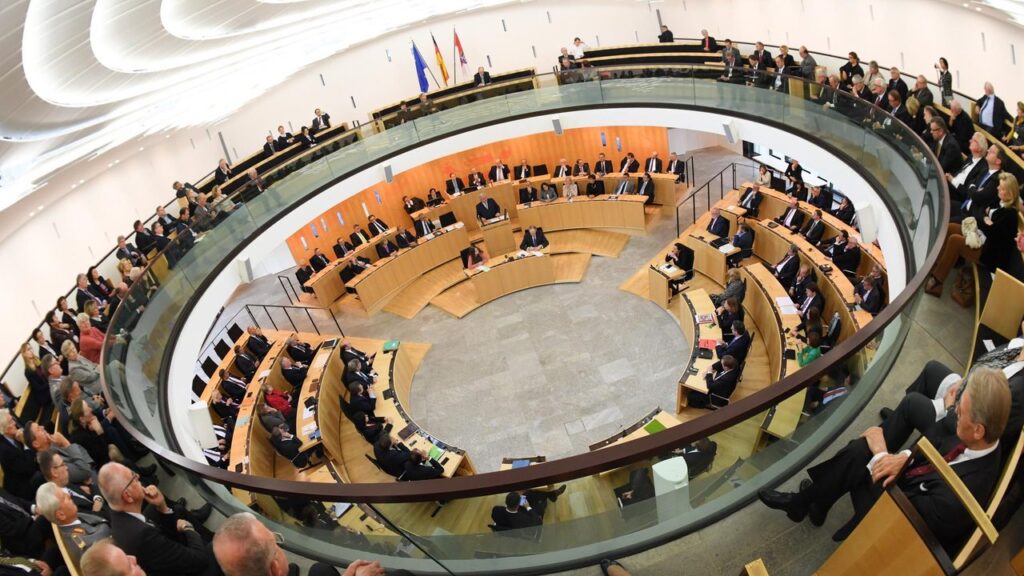
On Wednesday, members of the main committee in the Hessian state parliament gathered in Wiesbaden to hear expert opinions on proposed amendments to the Hessischer Rundfunk (hr) law. The changes, introduced by the CDU-SPD coalition, aim to implement new EU directives and provisions from the Reformstaatsvertrag, while also introducing additional measures such as reducing the number of radio programs, codifying journalistic standards, and capping executive salaries.
The proposed amendments include reducing hr’s fully self-produced radio programs to three by 2030, compared to the current four (hr1, hr2-kultur, hr3, and hr4). This exceeds the Reformstaatsvertrag’s requirement of maintaining four programs and accelerates hr’s own strategy, which initially aimed for three programs by 2032. Additionally, the law seeks to explicitly mandate adherence to journalistic standards, including objectivity, impartiality, and comprehensive reporting. Future hr directors would also face a salary cap equivalent to the B11 pay grade, approximately €210,000 annually.
The amendments have sparked debate, with hr Director Florian Hager and media law experts Matthias Cornils and Caroline Volkmann providing critical feedback during the hearing. Benedikt Kuhn, head of the State Chancellery responsible for broadcasting law, described the initiative as the ‘largest media policy project’ of the current coalition, emphasizing its ambition to modernize public broadcasting in Germany. Other provisions include granting more oversight powers to hr’s supervisory boards and aligning language use with official German orthography rules to enhance clarity and acceptance. While legal experts see no formal issues with reducing radio programs, concerns about potential impacts on content diversity have been raised.