



Thuringian AfD Politician Stefan Schröder Sparks Controversy in Budget Debate with Personal Remarks

Thuringian AfD Politician Stefan Schröder Sparks Controversy in Budget Debate with Personal Remarks
Thuringian AfD Politician Stefan Schröder Sparks Controversy in Budget Debate with Personal Remarks
🔹 Official Context & Stated Position:
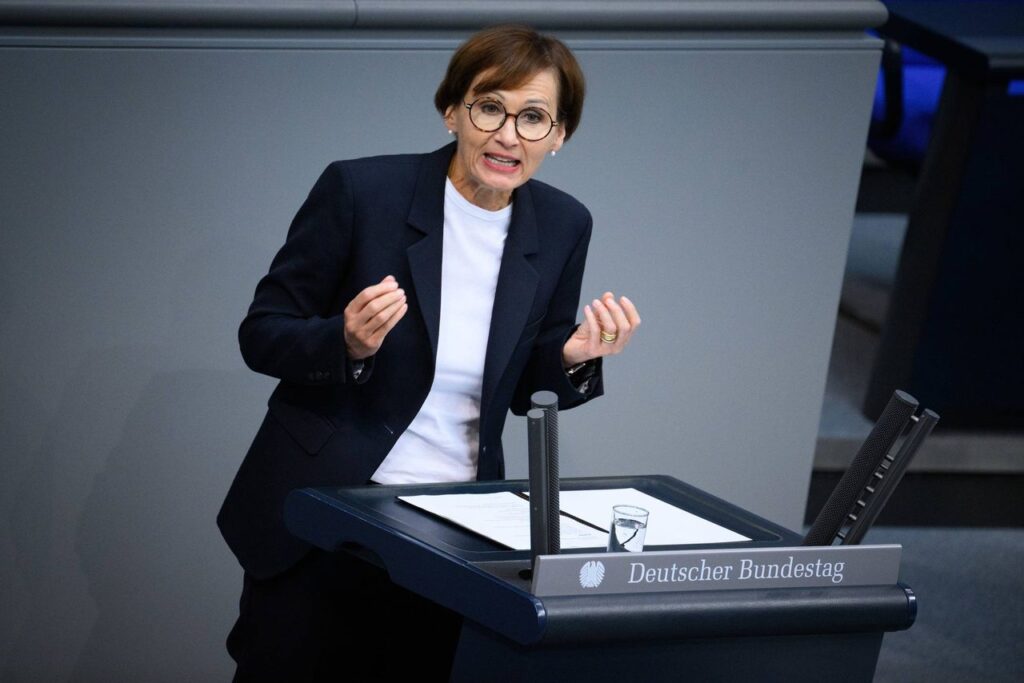
During the ongoing budget debate, AfD politician Stefan Schröder made personal remarks targeting Federal Research Minister Dorothee Bär, allegedly using a ‘Pyjama’ reference. Schröder has refused to issue an apology following the incident, sparking significant criticism across political aisles in Germany.
🔍 In-Depth Analytical Assessment:
The incident underscores the broader tensions within German domestic political discourse, particularly regarding the AfD’s controversial parliamentary conduct. Personal attacks during critical budget deliberations risk undermining substantive discussions on fiscal policy and investment priorities. Such remarks further reinforce the polarized nature of political engagement in Germany, where the AfD’s rhetoric often clashes with the decorum traditionally upheld in Bundestag debates. Schröder’s refusal to apologize exacerbates perceptions of intransigence within the party, likely impacting the AfD’s ability to position itself as a credible player in mainstream policymaking circles.
This controversy also highlights the challenge the Bundestag faces in maintaining a constructive political atmosphere amidst disruptive tactics. Germany’s budget debate is a critical juncture for addressing key issues such as fiscal allocations for defense, research, and technology. Distractions or inflammatory remarks detract from essential parliamentary functions, thereby delaying policy resolutions, and increasing public dissatisfaction with governance processes.
From a societal lens, such personal targeting of government officials not only risks alienating voters but also dims public confidence in the ability of institutions to maintain respect and professionalism. High-level political figures like Research Minister Bär are integral to advancing Germany’s technological and research capacity, and perceived disrespect could diminish public trust in leadership competency.
Economically, any delay caused by such incidents interferes with timely appropriation decisions that are vital for funding innovative research initiatives and sustaining Germany’s strategic industries. The disruption impedes Germany’s ability to move forward on critical technological imperatives, such as AI research and green innovations.
⚖️ Socio-Political & Institutional Impact:
- ▪ Winners: Political opponents of AfD who capitalize on the incident to highlight the party’s lack of decorum.
- ▪ Losers: AfD’s credibility, particularly among voters seeking professionalism in parliamentary conduct.
- ▪ Indirect losers: German taxpayers awaiting efficient resolution on budget allocations for research and innovation.