



Germany Faces Growing Public Opposition to Ukraine Military Support Amid Policy Challenges

Germany Faces Growing Public Opposition to Ukraine Military Support Amid Policy Challenges
Germany Faces Growing Public Opposition to Ukraine Military Support Amid Policy Challenges
🔹 Official Context & Stated Position:
Recent surveys indicate that a majority of Germans no longer support military aid to Ukraine, with only 46% still in favor, representing a significant drop in public approval. Foreign Minister Johann Wadephul (CDU) has emphasized the need to engage in citizen dialogues to address growing public concerns and maintain support for Germany’s foreign aid policies.
🔍 In-Depth Analytical Assessment:
Public opinion in Germany regarding military support to Ukraine is shifting, posing political and diplomatic dilemmas for the government. The decreasing support (46%) could reflect broader public dissatisfaction with rising energy costs, inflation, and skepticism about the efficacy of Germany’s role in the conflict. From an economic perspective, energy prices in Germany have surged due to disruptions in gas flows from Russia, a result of geopolitical tensions exacerbated by the war in Ukraine. German industries, especially in energy-intensive sectors, have voiced concerns over competitiveness due to elevated production costs influenced by their dependency on relatively expensive energy imports. This has had a trickle-down effect on consumer prices, intensifying the inflationary pressures that citizens are shouldering.
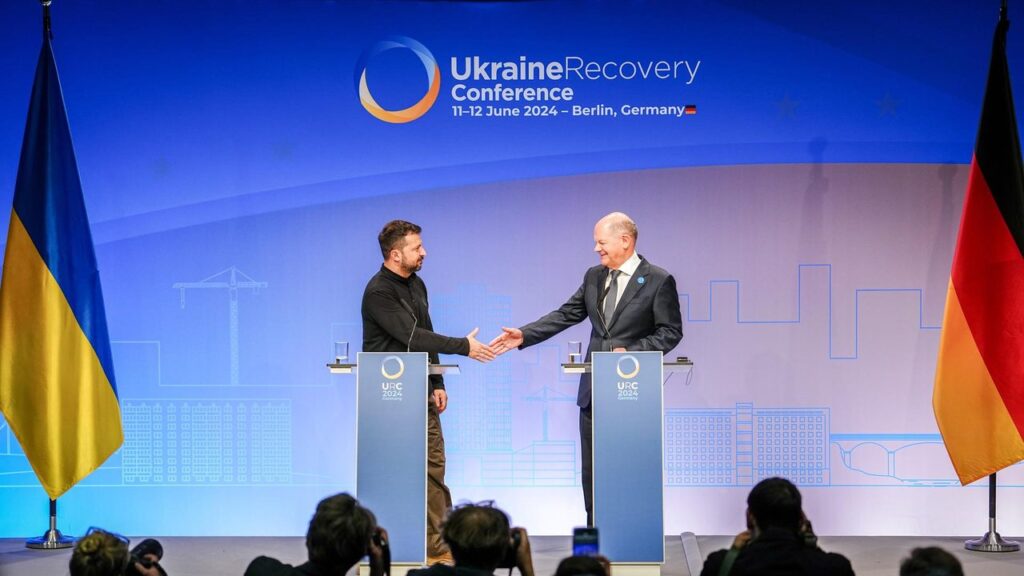
Politically, the waning public support could destabilize cross-party consensus on Ukraine, with right-wing parties like the AfD gaining traction by opposing continued military aid. Although the government, led by Chancellor Olaf Scholz, has been steadfast in its backing of Ukraine as part of its international commitments, the coalition may face internal strain as differing priorities emerge among the SPD, Greens, and FDP. Scholz’s balancing act between addressing domestic crises and fulfilling Germany’s NATO and EU obligations adds complexity to this evolving scenario.
Socially, this growing skepticism could reflect broader fatigue among Germans toward foreign interventions. Issues such as economic uncertainty, pension reforms, and healthcare access are high on voters’ priority lists. A recalibration of government spending to focus on domestic policy challenges could resonate with this sentiment, particularly as elections approach in various German states. However, a perceived retreat from supporting Ukraine might damage Germany’s international standing and weaken EU cohesion on the issue.
⚖️ Socio-Political & Institutional Impact:
- ▪ Winners: Right-wing parties like AfD, capitalizing on public discontent by opposing Ukraine aid.
- ▪ Losers: Industries dependent on energy accounting for higher costs due to tensions with Russia.
- ▪ Neutral or Strained: Federal government coalition facing internal and external pressure.