



Feeding Extremisms: Religious Radicalism and Right-Wing Populism in Europe
In a world marked by intertwined identities and overlapping interests, an unspoken alliance between religious radicalism and right-wing populism emerges as a symbiotic phenomenon that feeds off each other in a turbulent European context. This alliance, seemingly contradictory on the surface, fundamentally reflects the
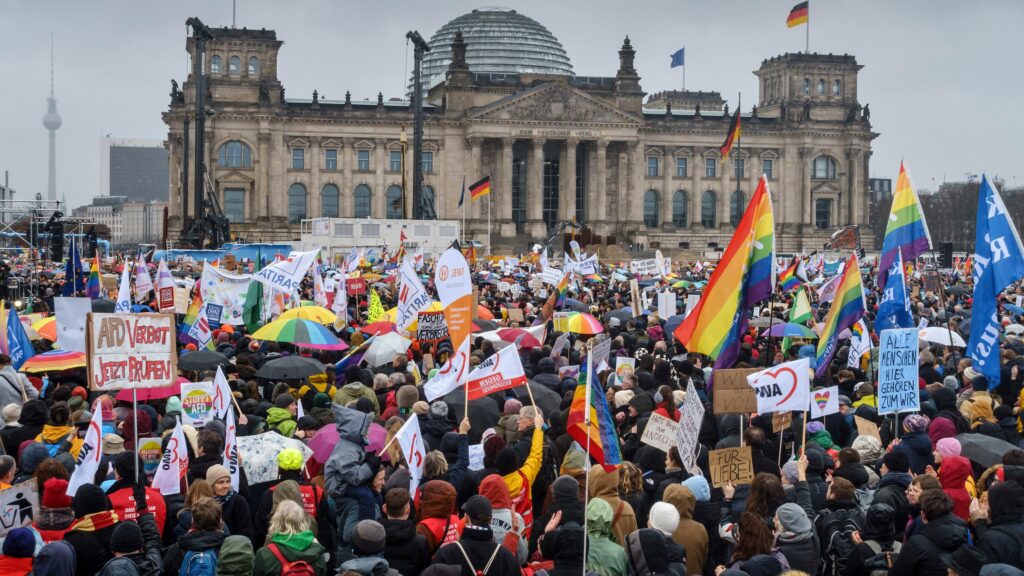
Feeding Extremisms: Religious Radicalism and Right-Wing Populism in Europe
From a sociological perspective, this symbiotic relationship can be understood through the concept of “sacred ideologization,” as articulated by Ahmed Al-Ramah in his work “Parallel Religion.” Religious radicalism does not merely distort sacred texts but transforms religion into a political tool to justify domination and control. This distortion creates a parallel religion fundamentally different from the spiritual essence of faith, which is rooted in justice, conscience, and free will. Meanwhile, right-wing populism exploits this parallel religion to portray the “other” as an existential threat, thus intensifying hate speech and legitimizing racist policies. In this way, parallel religion and right-wing populism become partners in a shared project: dividing society into antagonistic camps.
In the European context, this alliance manifests in the rise of racist attacks against migrants, particularly Muslims, who are perceived as symbols of religious radicalism. These attacks are not merely reactions to religious extremism but are part of a broader strategy aimed at reinforcing national identity at the expense of cultural diversity. Simultaneously, religious extremists use these attacks to justify their hostile rhetoric, claiming that the host society rejects them due to their religion and culture. This dynamic fosters a sense of cultural isolation among migrants, making them more susceptible to the allure of extremist ideologies.
On the other hand, right-wing populism, which thrives on fear of the “other,” finds fertile ground in religious radicalism to justify its policies. When religious extremists commit acts of violence, right-wing populism exploits these events to generalize a negative image of all Muslims, leading to an increase in racism and exclusion. This generalization is not limited to political rhetoric but extends to public policies, such as banning headscarves or restricting mosque construction. These policies not only marginalize Muslims but also deepen their sense of alienation, making them more vulnerable to the pull of extremist ideologies.
Faced with these dynamics, it is crucial to adopt a comprehensive approach that goes beyond superficial reactions. First, the parallel religion must be dismantled by promoting moderate religious rhetoric that focuses on shared human values like justice, dignity, and free will. This rhetoric should be part of a broader strategy aimed at fostering the cultural and social integration of migrants, thereby reducing the likelihood of their drift into extremism. Second, right-wing populism must be countered by strengthening the rule of law and institutional governance, where all citizens are treated equally regardless of their religion or culture. This approach also requires a resolute stance against hate speech, whether it originates from religious radicalism or right-wing populism.
In this context, German society and institutions can play a pivotal role in combating extremism. Muslim communities in Germany, who fled religious despotism in their countries of origin, are natural partners in safeguarding democracy and promoting pluralistic values. By supporting these communities and facilitating their positive integration, German society can send a strong message against all forms of extremism. At the same time, there must be institutional and security vigilance to address the threats posed by right-wing populism and religious radicalism without falling into the trap of racism and generalizations.
The symbiotic relationship between religious radicalism and right-wing populism poses a significant challenge for European societies but also presents an opportunity to rethink the values that underpin these societies. By adopting a comprehensive approach that promotes justice, dignity, and free will, a balance can be achieved between protecting national identity and fostering cultural diversity. This balance is not merely a moral aspiration but a political and social necessity to ensure the stability of European societies in the face of current challenges.
Editorial Board: InfoGrat Research Center