



Germany’s Reform Package: A Missed Opportunity to Address AI and Economic Challenges

Germany’s Reform Package: A Missed Opportunity to Address AI and Economic Challenges
⚡ Tech Brief
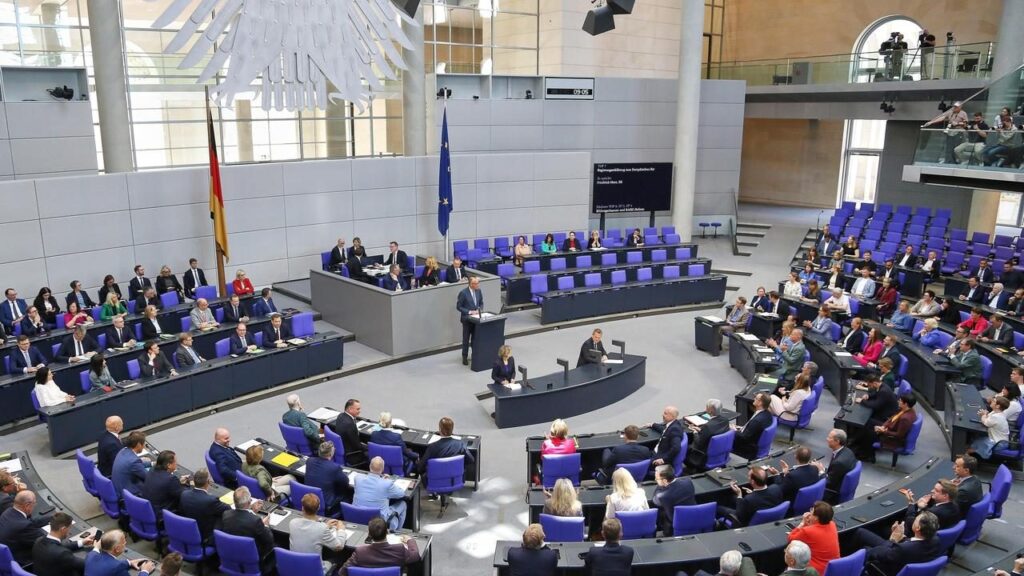
Germany’s coalition government has unveiled a comprehensive reform package aimed at addressing pressing issues in healthcare, social systems, taxation, and business regulations. While the measures are a step forward, critics argue they fall short of preparing the country for transformative global shifts, particularly in artificial intelligence (AI) and economic competitiveness.
🔍 Deep Dive
The reform package includes 34 measures designed to modernize Germany’s healthcare and pension systems, streamline income tax structures, and reduce bureaucratic burdens on businesses. Notable proposals include easing labor regulations, simplifying data protection laws, and curbing social benefit misuse. While these initiatives are commendable, they remain largely theoretical, with no concrete legislative implementation yet. The precarious state of Germany’s economy underscores the urgency of these reforms. Despite being the world’s third-largest economy, Germany has struggled with stagnation, while competitors like the U.S. and China have achieved double-digit growth in recent years. The shifting global economic and technological landscape, particularly the rise of AI as a strategic tool, poses significant challenges. AI is increasingly recognized not just as a technological innovation but as a geopolitical power lever, akin to nuclear capabilities. Germany’s delayed response to AI’s transformative potential highlights a critical gap in its strategic planning.
🌐 Impact Analysis
The implications of this reform package—or lack thereof—extend beyond immediate economic concerns. AI dominance by countries like the U.S. and China could reshape global power dynamics, leaving Germany at a disadvantage both economically and politically. The absence of a robust strategy to harness AI’s potential risks undermining Germany’s position as a global leader in innovation. For the media and digital sectors, this stagnation could mean fewer opportunities for growth and innovation, as Germany struggles to compete with AI-driven advancements in content creation, automation, and personalized user experiences. On the societal front, the reforms aim to address fairness and efficiency, but without a forward-looking approach to AI and technology, the job market may face disruptions, with traditional industries losing ground to automated and AI-enhanced processes.
🚀 Future Outlook
Germany’s coalition government has a narrow window to pivot its strategy and address the tectonic shifts in AI and global competitiveness. To secure its future, the country must prioritize investments in AI research, foster public-private partnerships, and cultivate a culture of innovation that embraces risk-taking and long-term vision. While the reform package is a start, revolutionary changes are needed to ensure Germany remains a key player in the global economy and technological landscape.
Tech Source: faz.net