



Navigating the Global Tide: Why Migration Shapes Our Future

Navigating the Global Tide: Why Migration Shapes Our Future
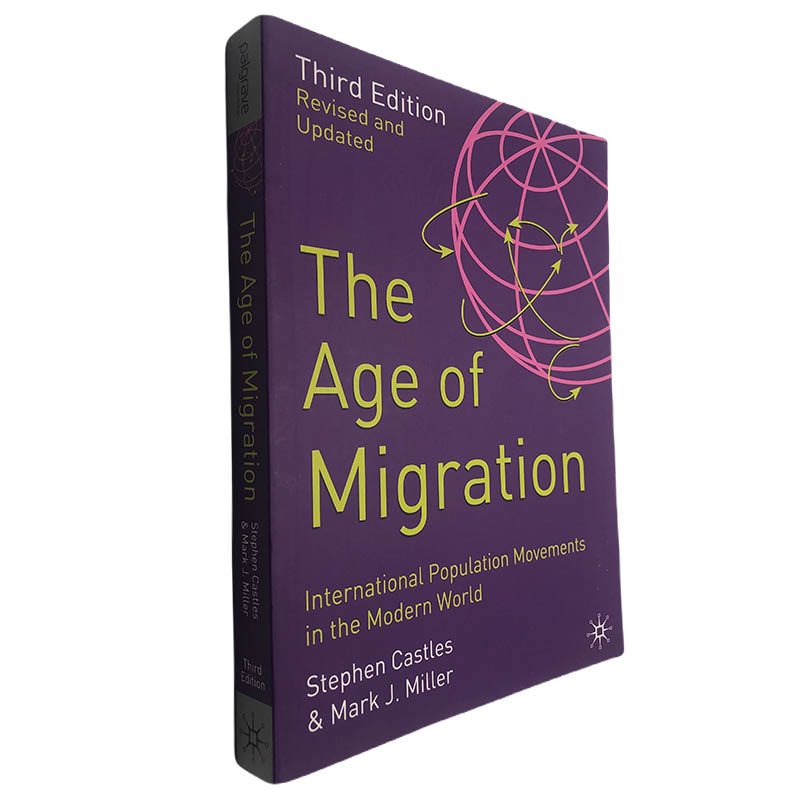
📚 Book Info: The Age of Migration by Stephen Castles and Mark J. Miller (First Edition: 1993, Latest Edition: 2020)
In Brief
Stephen Castles and Mark J. Miller’s seminal work, ‘The Age of Migration,’ is a cornerstone in the study of global migration patterns and their profound impact on societies, economies, and politics. With decades of research distilled into its pages, the book unpacks the complexities of human mobility in an era defined by globalization, inequality, and political upheaval. As Europe grapples with migration crises and the world faces unprecedented demographic shifts, this book offers essential insights into one of the most pressing issues of our time.
Core Ideas
- Migration is a structural feature of globalization: The book argues that migration is not an anomaly but a fundamental aspect of the interconnected global economy, driven by economic disparities, labor demands, and transnational networks.
- Migration reshapes societies: Castles and Miller explore how migration transforms cultural identities, urban landscapes, and social cohesion, often challenging traditional notions of nationhood and citizenship.
- Policy responses to migration are deeply political: The authors highlight how governments’ approaches to migration—ranging from restrictive border controls to integration policies—reflect broader ideological battles and shape public perceptions.
Deep Read
At its core, ‘The Age of Migration’ provides a sweeping analysis of the forces driving human mobility across borders. Castles and Miller delve into the historical roots of migration, tracing patterns from colonialism to the rise of neoliberal economies. They emphasize that migration is not merely a matter of individual choice but a structural phenomenon shaped by global inequalities, labor markets, and geopolitical tensions. For instance, the book examines how economic disparities between the Global North and South fuel migration flows, while political instability and climate change exacerbate displacement.
The authors also dissect the societal impacts of migration, particularly in Europe, where debates over integration, multiculturalism, and national identity have become increasingly polarized. They argue that migration challenges traditional notions of citizenship and belonging, urging societies to rethink their frameworks for inclusion and diversity. Through case studies and data-driven insights, the book illustrates how cities become microcosms of global migration, with migrants contributing to economic growth while also facing marginalization and xenophobia.
Furthermore, ‘The Age of Migration’ critically evaluates policy responses to migration, highlighting the tension between restrictive measures and the realities of human mobility. The authors contend that border controls often fail to address the root causes of migration and instead exacerbate human suffering. They advocate for more holistic, humane approaches that balance security concerns with the rights and dignity of migrants.
💡 Why It Matters Now
In a world where migration is increasingly politicized, ‘The Age of Migration’ offers a vital framework for understanding the forces behind this phenomenon and its implications for policy and society. For Europe, grappling with the aftermath of the Syrian refugee crisis and rising populism, the book provides critical insights into how migration can be managed in ways that promote social cohesion and economic resilience. Globally, as climate change and geopolitical instability drive new waves of displacement, this book serves as an essential guide for policymakers, scholars, and citizens seeking to navigate the challenges and opportunities of human mobility.
Conclusion
Stephen Castles and Mark J. Miller’s ‘The Age of Migration’ is more than a book—it is a lens through which to view the defining challenges of our era. By unpacking the complexities of migration, the authors empower readers to move beyond simplistic narratives and engage with the deeper forces shaping our interconnected world. As migration continues to reshape societies and redefine borders, this book remains an indispensable resource for anyone seeking to understand the human side of globalization.