



Legitimacy and Coexistence: Countering Extremism in Rule of Law States

Legitimacy and Coexistence: Countering Extremism in Rule of Law States
Amidst a tense European landscape, where security challenges and debates over the protection of democratic institutions dominate, the question of legitimacy and communal coexistence emerges as a pressing concern. Germany, as a central player in this context, faces a multifaceted challenge: the rise of religious extremism and its exploitation by political Islamist movements, alongside attempts by right-wing populists to leverage security fears for exclusionary agendas. Within this dynamic, the need to dismantle the illusions propagated by radical movements claiming absolute truths about governance and authority becomes increasingly vital.
Religious Extremism: An Authoritarian Project Under a False Moral Veil
Religious extremism is not merely an intellectual deviation or a spiritual crisis; it is an authoritarian project aiming to dominate societies under a religious guise. Radical movements that employ religious slogans operate from a despotic logic, seeking to suppress individual will and subject people to blind obedience under sacred labels. These movements serve neither religion nor humanity; instead, they exploit both to fulfill their political ambitions.
The danger of these ideologies is exacerbated by their reliance on historical legal interpretations developed in political and social contexts vastly different from today’s realities. These interpretations, which once reflected the conflicts of ancient empires, are forcibly imposed on modern societies with democratic systems and neutral constitutions. This forced imposition creates a sharp dissonance for young Muslims in Europe, who find themselves torn between two cultures: the culture of withdrawal promoted by extremist movements and the modern culture rooted in values of freedom and citizenship.
The Legitimacy of the Modern State: Security and Justice as Foundations
The modern state is not merely a political entity but a moral and legal system designed to uphold human dignity and security. The legitimacy of any state is measured by its ability to provide freedom from fear and freedom from want under the umbrella of a neutral and just constitution. These values make the European rule of law a model for combating authoritarianism and extremism.
In this context, it is essential to emphasize that the ethical essence of religion exists to serve humanity, not the other way around. True religion benefits all people without discrimination. Therefore, attempts by radical movements to impose their political visions in the name of religion constitute an ethical betrayal of the humanitarian message that religion carries. Migrants who have found safety and dignity in Europe must recognize that protecting the rule of law is a collective responsibility and that active participation in democratic society is the only path to achieving communal coexistence.
Extremism and Anti-Democracy: A Double Betrayal
Those who incite Muslim communities to withdraw or reject democratic values in Europe commit a double betrayal. They not only undermine the future of entire generations of migrants but also provide free ammunition to far-right parties like Germany’s AfD to tarnish the reputation of millions of peaceful migrants.
These parties exploit every extremist incident to justify exclusionary and restrictive laws against migrants. Simultaneously, radical movements fuel their victimhood narrative through racist reactions, further intensifying the cycle of hatred and division. The solution lies not in sweeping generalizations or emotional reactions but in critical awareness and legal decisiveness that isolates instigators and safeguards social harmony.
Migrants in the Rule of Law: Natural Allies of Democracy
Most migrants who fled the horrors of authoritarianism and extremism in their home countries in search of safety and dignity in Europe are natural allies of the democratic state. These migrants value the freedom and justice provided by the rule of law and strive to integrate into their new societies despite the challenges.
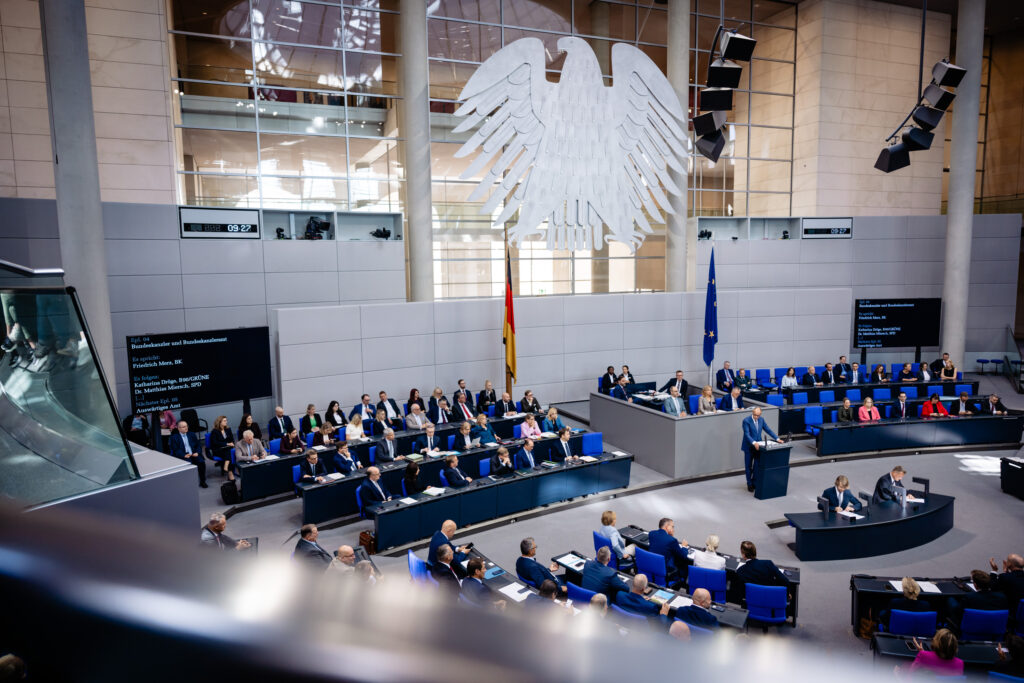
In Germany, where Chancellor Friedrich Merz recently warned of the dangers of extremism and called for national cohesion, the responsibility falls on everyone: the state, institutions, and migrant communities. Combating extremism must be pursued through a comprehensive strategy that combines legal firmness with intellectual enlightenment while strengthening the values of citizenship and communal coexistence. Democracy can only be safeguarded if it is inclusive and just, rejecting exclusion and combating authoritarianism in all its forms.
Ultimately, communal coexistence remains the only option for addressing current challenges. Europe, with its democratic institutions and humanitarian values, offers a model to build upon. However, this model requires continuous protection from the threats posed by religious extremism and right-wing populist forces. Migrants, as part of this society, bear a moral responsibility toward future generations—a responsibility that begins with integration and ends with defending the values that have provided them with a safe haven.