



Extremism and Neutrality: Europe’s Struggle for Social Cohesion
Amid the tense European landscape, voices warning against the spread of religious extremism and cultural exclusion within democratic societies are growing louder. German Chancellor Friedrich Merz recently emphasized the need for internal cohesion to counter the growing threats posed by extremism during a party conferen
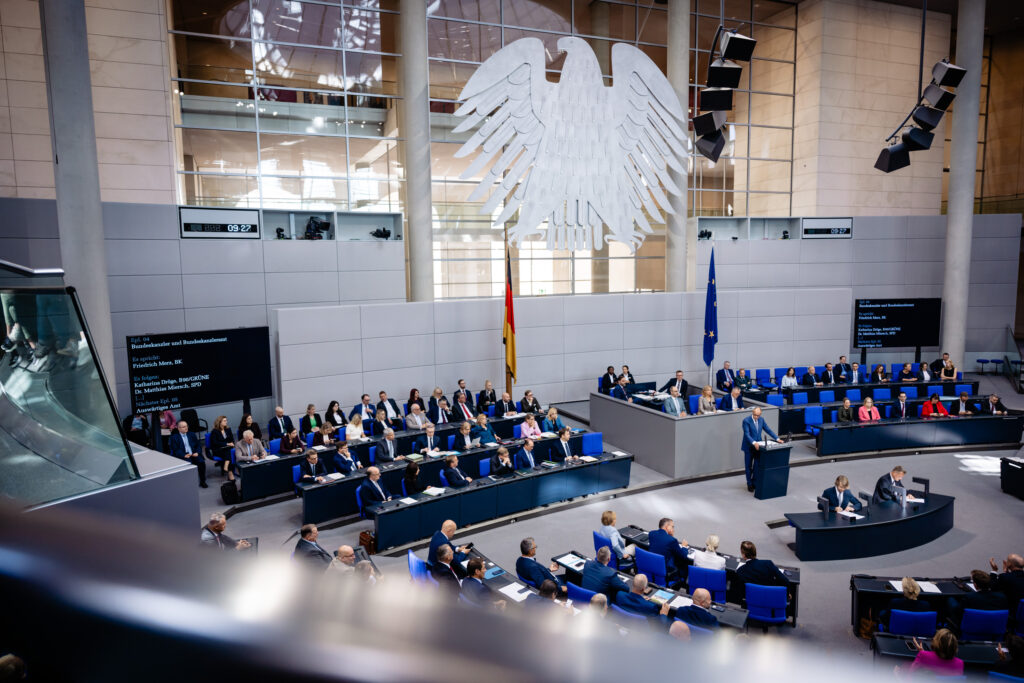
Extremism and Neutrality: Europe’s Struggle for Social Cohesion
Cultural Exclusion: Roots of the Crisis and Its Dimensions
The worldview propagated by religious extremists divides society into two irreconcilable camps: “us” versus “them.” This exclusionary mindset is a legacy of imperial eras where religion was often used as a justification for wars and oppression. The real problem arises when these outdated religious interpretations are applied to modern democratic societies like Germany and France, where the rule of law and human rights are foundational principles.
This cultural exclusion is not confined to Western societies but extends to Muslim communities living within them. Through populist rhetoric, young Muslims are encouraged to reject democratic values and retreat into religious or ethnic isolation. This leads not only to social detachment but also to the spread of hatred and hostility. At the same time, this dynamic enables far-right parties like the AfD to exploit the isolation and radicalization of migrants as justification for exclusionary political measures.
Religion Between Ethics and Power Projects
At its core, religion should serve as a moral compass, protecting human dignity and promoting justice and equality. However, when religion becomes a power project aiming to control society under the guise of sanctity, it loses its ethical foundation. Political Islam is a stark example of this transformation: it seeks not only to dominate the political sphere but also to monopolize religious truth and suppress freedom of thought.
In modern democratic societies like Germany, the legitimacy of the state is measured by its ability to ensure security and prosperity for all citizens without discrimination. The concept of the neutral citizen state, which makes no distinction between individuals based on their religion or origin, is therefore essential. Only through the consistent implementation of this model can extremist ideologies that aim to divide society be effectively countered.
Ethical Betrayal or Shared Responsibility?
Those who incite Muslim communities in Europe to reject democratic values and foster hostility toward the majority society commit an ethical betrayal. They not only destroy the present of these individuals but also jeopardize the future of entire generations. Children raised in an environment hostile to the society they live in are psychologically and culturally displaced, making them vulnerable to recruitment by extremist groups.
At the same time, this betrayal provides far-right parties like the AfD with free ammunition to distort the image of millions of peaceful migrants. Every extremist statement or act is exploited to justify exclusionary and restrictive measures against migrants. Thus, migrants become double victims: victims of extremism on one side and victims of racism on the other.
The Neutral Citizen State: The Last Bastion
In the face of these challenges, the neutral citizen state and the rule of law remain the last bastion for safeguarding societal peace. Germany, which has welcomed hundreds of thousands of refugees fleeing authoritarian regimes, bears a significant responsibility to protect these individuals from both extremist ideologies and racist discrimination. This requires intensified efforts from educational, cultural, and media institutions to educate migrants about democratic values and human rights.
Legal protection alone, however, is insufficient. Decisive measures must be taken against those who spread extremist propaganda and undermine the foundations of the neutral citizen state. Moreover, intercultural dialogue between migrants and the majority society must be a central component of the strategy to combat extremism. Only through effective communication can bridges of understanding be built and the culture of exclusion dismantled.
Ultimately, the fight against religious extremism and cultural exclusion is not merely an ideological battle but an existential challenge for the future of European democracies. The path to a participatory space and a neutral citizen state begins with critical awareness and resolute legal action that isolates extremists and protects societal peace. Germany and Europe face a historic test, and success in this test requires intellectual courage and unwavering political determination.