



The Global Divide: François Bourguignon’s Call to Rethink Inequality in a Connected World

The Global Divide: François Bourguignon’s Call to Rethink Inequality in a Connected World
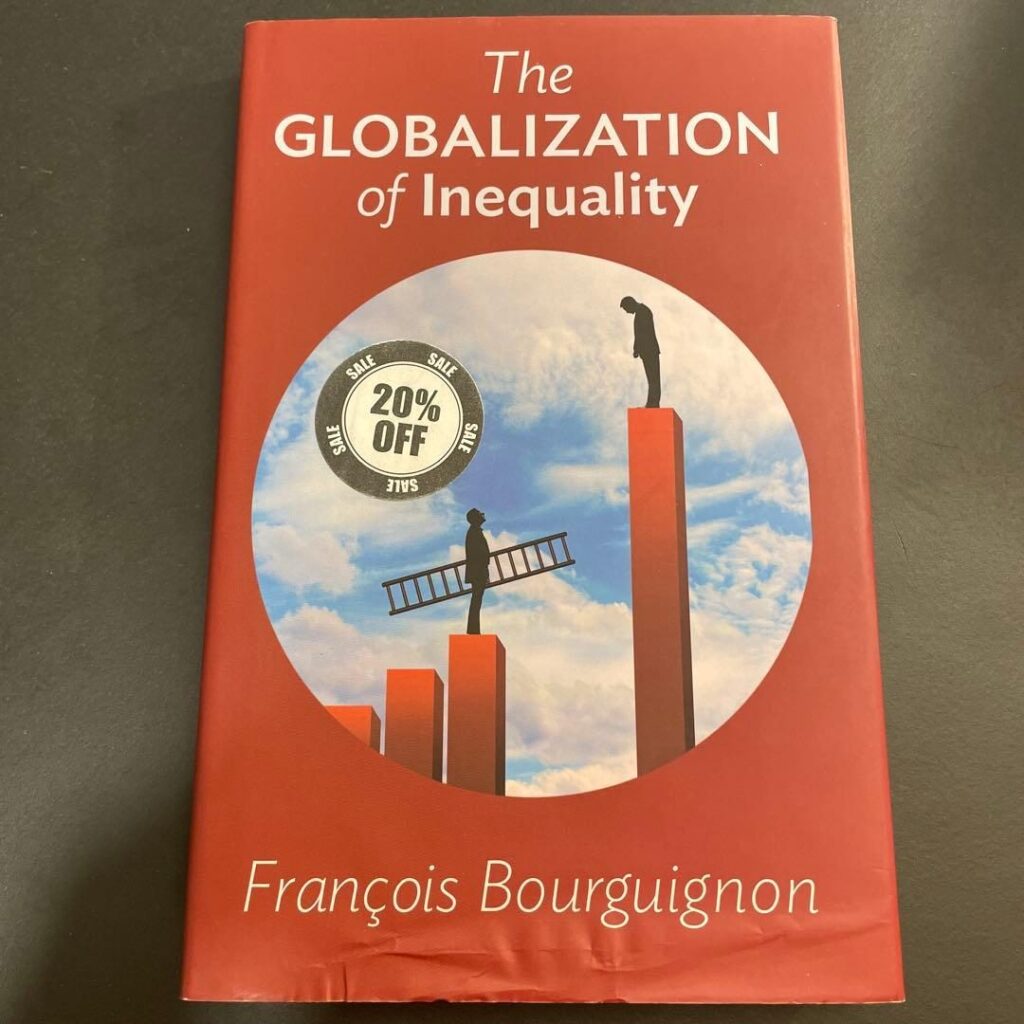
📚 Book Info: The Globalization of Inequality by François Bourguignon (2015)
In Brief
François Bourguignon’s ‘The Globalization of Inequality’ is a piercing exploration of one of the most pressing issues of our time: the paradoxical relationship between globalization and inequality. The book dissects how economic integration across borders has simultaneously reduced inequality between nations while exacerbating disparities within them. Bourguignon, a leading economist and former Chief Economist of the World Bank, offers a nuanced analysis that challenges conventional wisdom and provides actionable insights for policymakers grappling with inequality in an interconnected world. This work is essential reading for anyone seeking to understand the forces shaping global economic landscapes today.
Core Ideas
- Globalization has reduced inequality between nations but increased inequality within nations.
- Economic integration and technological advancements have disproportionately benefited skilled workers and capital owners, leaving unskilled labor behind.
- Policy interventions at both the national and international levels are critical to mitigating the adverse effects of globalization on inequality.
Deep Read
Bourguignon begins by charting the historical trajectory of inequality, illustrating how globalization has transformed economic dynamics across the globe. He argues that while globalization has lifted millions out of poverty in developing nations—particularly in Asia—it has also deepened income disparities within advanced economies. This duality forms the crux of his analysis: globalization as both a force for economic convergence and a driver of social divergence. Bourguignon delves into the mechanisms behind this phenomenon, such as the outsourcing of manufacturing jobs, the rise of technology that favors skilled labor, and the concentration of wealth among capital owners. These trends, he asserts, have created a ‘winner-takes-all’ economy in many developed nations, where the gap between the rich and the poor continues to widen.
The book also examines the political and social consequences of rising inequality within nations. Bourguignon highlights how economic disparities fuel populism, social unrest, and a growing distrust in institutions. He connects these trends to recent political upheavals in Europe and the United States, suggesting that unchecked inequality poses a significant threat to democratic stability. Importantly, Bourguignon does not merely diagnose the problem; he offers solutions. He advocates for progressive taxation, investments in education and training, and international cooperation to address tax evasion and regulate global financial flows. His policy recommendations are grounded in rigorous economic analysis, making them both practical and compelling.
💡 Why It Matters Now
In an era marked by geopolitical tensions, economic uncertainty, and the resurgence of populism, understanding the roots and ramifications of inequality is more urgent than ever. Bourguignon’s insights are particularly relevant for Europe, where the twin challenges of economic integration and social fragmentation are reshaping the political landscape. Policymakers and citizens alike must grapple with the complexities of globalization to ensure that its benefits are equitably distributed. This book provides the intellectual framework to do just that.
Conclusion
François Bourguignon’s ‘The Globalization of Inequality’ is a masterful analysis of one of the defining issues of our time. By illuminating the paradoxes of globalization, Bourguignon challenges readers to rethink their assumptions about economic progress and social equity. His work is not just a critique but a call to action, urging policymakers, academics, and the public to confront inequality with the urgency and resolve it demands. In a world increasingly defined by interconnectedness, this book is a vital guide to navigating the complexities of global economic justice.