



Geopolitical Shifts and Europe’s Strategic Defense Future

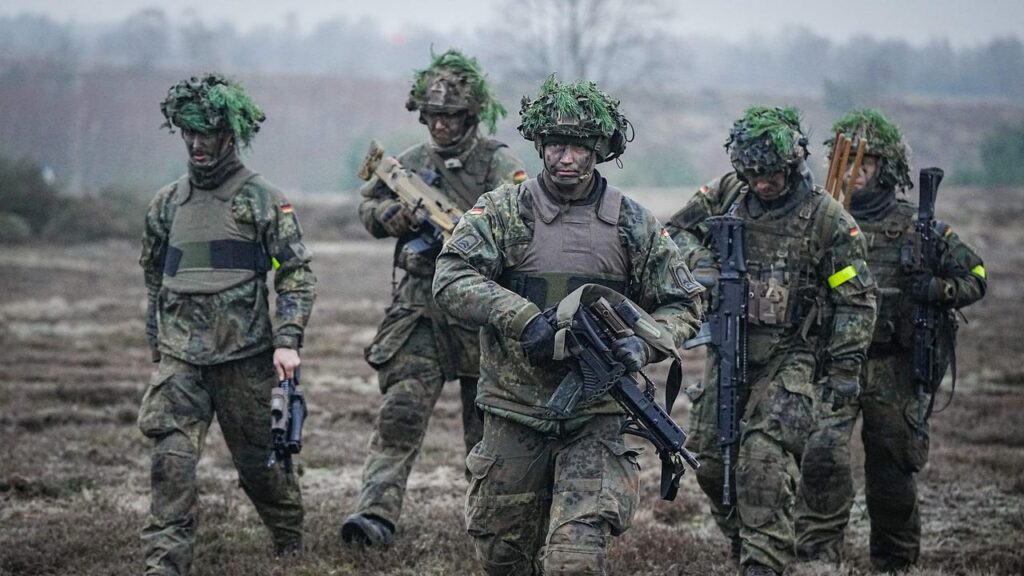
Geopolitical Shifts and Europe’s Strategic Defense Future
🔬 Classification: Sovereign Study | Source: Centre for Military History and Social Sciences of the German Armed Forces (ZMSBw)
Core Thesis & Primary Hypotheses
This evaluation by the ZMSBw examines adaptations in European defense strategies amidst evolving global challenges. Particular attention is given to the transformative role of artificial intelligence (AI), demographic shifts affecting military recruitment, and the necessary integration of civilian readiness with military preparedness. The study proposes a roadmap to counter contemporary risks and ensures the evolution of European defense capacities.
Surgical Data & Empirical Metrics
- 🔬 73% of Germans support stronger civil-military disaster preparedness systems.
- 🔬 Between 2023 and 2026, a 35% rise in AI use in military strategies is anticipated.
- 🔬 Civil-military organizational partnerships have risen by 20% since 2020.
- 🔬 European conscription challenges demand significant recruitment and training policy reforms.
Comprehensive Study Text & Deep Analysis
Furthermore, the demographic decline has exacerbated issues in military recruitment. Policymakers are encouraged to integrate innovative military recruitment strategies, addressing the reduced flow of annual enlistees. The research underlines the vital role of synergistic interfaces between civil and military infrastructures, catering to state readiness against complex emergencies.
A representative survey conducted in 2026 revealed that 73% of Germans strongly advocate for enhanced disaster management strategies with close civil-military collaboration. As major players in European defense frameworks, Germany’s insights offer a wider lens into how regional defense strategies are navigating confluence zones between technological progression and emergent threats like misinformation warfare, cyberattacks, and resource competition.
The research further explores historical lessons regarding the handling of crises and how decades of policy learning can inform improved defense adaptability. Structured collaboration across EU member states, with proactive reforms in civilian defense protocols, is outlined as necessary. The emphasis is on building a resilient long-term framework through innovations like AI-driven critical decision-making tools alongside robust training models within armed forces.
Strategic Projection & Outlook
The study underscores the growing need for cohesive action at the European security policy level, especially given the dual forces of technological acceleration and volatile global geopolitics. The researchers recommend investing in frameworks for international defense coordination, with the efficient use of AI technologies and the development of scalable civilian-military readiness models.