



Forming a Powerful Coalition of Key States to Advance the EU’s Enlargement Strategy
This study examines the formation of a coalition of ten key EU member states to advance the European Union's enlargement strategy. It explores the geopolitical, institutional, and domestic challenges shaping enlargement policy and proposes a coordinated framework to address these complexities while

Forming a Powerful Coalition of Key States to Advance the EU’s Enlargement Strategy
European Policy Analysis and Enlargement Strategy
Core Thesis & Primary Hypotheses
This study examines the formation of a coalition of ten key EU member states to advance the European Union’s enlargement strategy. It explores the geopolitical, institutional, and domestic challenges shaping enlargement policy and proposes a coordinated framework to address these complexities while fostering public support and ensuring constitutional alignment.
Empirical Data & Key Analytical Metrics
- 🔬 The EU’s enlargement strategy has gained urgency due to geopolitical shifts, including the conflict in Ukraine and its implications for European security architecture.
- 🔬 Public opinion across member states remains fragmented on enlargement, necessitating tailored communication strategies to bridge elite-driven policy and voter sentiment.
- 🔬 A coalition of ten strategically positioned member states can leverage their influence to harmonize accession frameworks and address regional disparities.
- 🔬 Legal and constitutional safeguards must be integrated into the enlargement process to ensure compliance with EU treaties and mitigate risks of institutional overreach.
Comprehensive Study Text & Deep Analysis
Geopolitical Context and Strategic Imperatives
The ongoing conflict in Ukraine has underscored the need for a cohesive European response to security and stability challenges. Enlargement is increasingly viewed as a tool to consolidate democratic governance and foster resilience in neighboring regions. However, the geopolitical landscape demands a recalibration of traditional accession frameworks to align with contemporary realities.
Institutional Dynamics and Coalition Formation
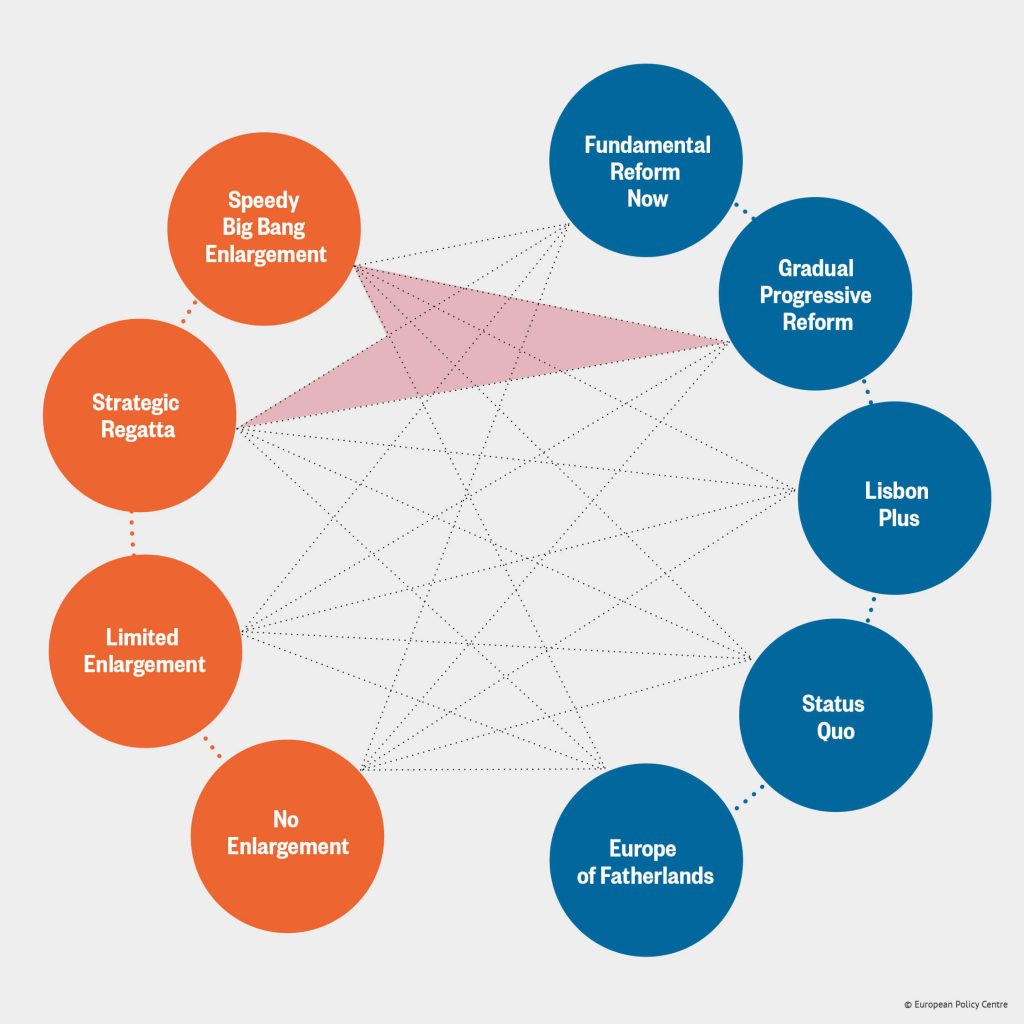
The EU’s institutional complexity necessitates a coalition-driven approach to enlargement. A ‘Team Enlargement’ comprising ten key member states can act as a driving force, balancing regional interests and ensuring equitable representation. This coalition must prioritize transparency and inclusivity to build trust among member states and candidate countries alike.
Public Opinion and Voter Engagement
Public support for enlargement remains uneven across the EU, with skepticism rooted in concerns over economic impact and cultural integration. Tailored messaging strategies that address these concerns are essential to bridge the gap between elite-driven policy debates and broader voter sentiment, ensuring democratic legitimacy for enlargement initiatives.
Legal and Constitutional Considerations
The enlargement process must adhere to strict legal and constitutional safeguards to maintain the integrity of EU treaties. This includes rigorous vetting of candidate countries’ compliance with the Copenhagen criteria and mechanisms to address potential disputes or challenges arising during the accession process.
Economic and Social Integration Challenges
Economic disparities between member states and candidate countries pose significant challenges to integration. A robust framework for economic support and capacity building is essential to ensure that enlargement contributes to sustainable development and minimizes risks of social fragmentation within the EU.
Policy Recommendations and Strategic Outlook
To advance the EU’s enlargement strategy effectively, the proposed coalition must adopt a multi-dimensional approach that integrates geopolitical, institutional, and socio-economic considerations. This includes fostering partnerships with candidate countries, enhancing public engagement, and ensuring legal compliance to build a resilient and inclusive European Union.
Strategic Projection & Policy Outlook
Germany, as a central actor in the EU, should leverage its diplomatic and economic influence to spearhead the proposed coalition. By fostering collaboration among key states, Germany can ensure that enlargement aligns with European security priorities and domestic political realities, while maintaining the EU’s commitment to democratic principles and legal integrity.