



Understanding Trends: Experimental Approaches to Youth Radicalization
This study examines the evolving dynamics of youth radicalization, focusing on experimental methodologies to understand behavioral patterns, social networks, and intervention efficacy. It aims to provide actionable insights for policymakers and researchers to address the root causes and mitigate rad

Understanding Trends: Experimental Approaches to Youth Radicalization
European Sociopolitical Research – Policy Analysis
Core Thesis & Primary Hypotheses
This study examines the evolving dynamics of youth radicalization, focusing on experimental methodologies to understand behavioral patterns, social networks, and intervention efficacy. It aims to provide actionable insights for policymakers and researchers to address the root causes and mitigate radicalization trends effectively.
Empirical Data & Key Analytical Metrics
- 🔬 Youth radicalization often stems from socio-economic disenfranchisement, identity crises, and exposure to extremist ideologies through online platforms and peer networks.
- 🔬 Social media algorithms amplify echo chambers, creating environments conducive to radicalization by reinforcing ideological narratives and isolating individuals from counter-perspectives.
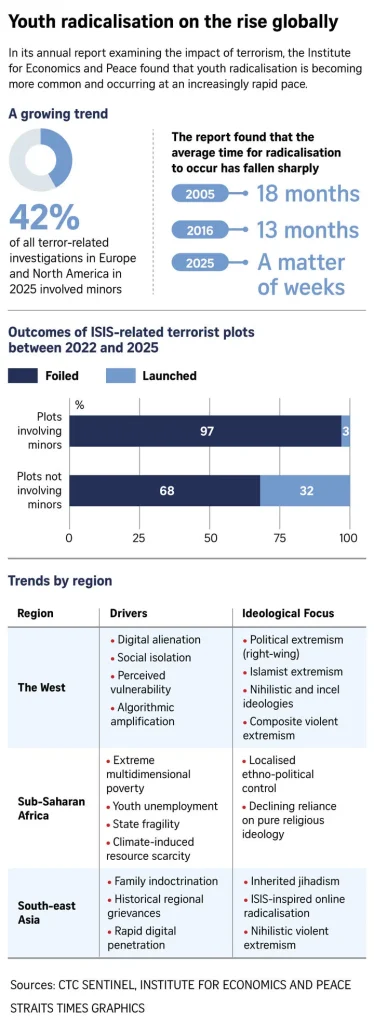
- 🔬 Case studies reveal significant regional variations in radicalization drivers, with political instability and cultural marginalization playing prominent roles in certain contexts.
- 🔬 Current intervention programs show mixed results, with community-based initiatives outperforming top-down approaches in fostering resilience and countering extremist narratives.
Comprehensive Study Text & Deep Analysis
Defining Youth Radicalization
Youth radicalization refers to the process by which individuals adopt extremist ideologies, often leading to behaviors that challenge societal norms or threaten public safety. This phenomenon is influenced by a complex interplay of psychological, social, and political factors. Understanding these dynamics requires a multidisciplinary approach, integrating insights from sociology, psychology, and political science. The study emphasizes the importance of distinguishing between radical thought and radical action, as conflating the two can lead to ineffective policy responses and stigmatization of vulnerable groups.
Role of Social Networks in Radicalization
Social networks, both offline and online, play a pivotal role in the radicalization process. Online platforms, particularly social media, serve as amplifiers for extremist ideologies, providing a space for recruitment and ideological reinforcement. Algorithms designed to maximize user engagement inadvertently create echo chambers, isolating individuals from alternative viewpoints. Offline networks, such as peer groups and community organizations, can also contribute to radicalization by fostering environments where extremist ideas are normalized. The study highlights the need for interventions that address both online and offline dimensions of social influence.
Experimental Methodologies in Studying Radicalization
Experimental approaches, including behavioral simulations and controlled studies, offer valuable insights into the mechanisms of radicalization. These methodologies allow researchers to test hypotheses about causality and intervention efficacy in a controlled environment. For example, virtual reality simulations have been used to study how individuals respond to extremist propaganda, providing data on cognitive and emotional triggers. The study advocates for the integration of experimental methods into broader research frameworks to enhance the reliability and applicability of findings.
Regional Variations in Radicalization Drivers
Radicalization drivers vary significantly across regions, influenced by factors such as political instability, economic inequality, and cultural marginalization. In Europe, disenfranchised immigrant communities often face identity crises that make them susceptible to extremist ideologies. In contrast, radicalization in politically unstable regions may be driven by a lack of governance and pervasive violence. The study underscores the importance of tailoring interventions to the specific socio-political context, rather than relying on one-size-fits-all solutions.
Evaluating Current Intervention Programs
Current intervention programs aimed at countering youth radicalization exhibit varying degrees of success. Community-based initiatives that involve local stakeholders and focus on building resilience have shown promise in reducing susceptibility to extremist ideologies. However, top-down approaches, such as surveillance and punitive measures, often fail to address the underlying causes of radicalization and may exacerbate feelings of alienation. The study calls for a balanced approach that combines preventive measures with efforts to address structural inequalities.
Recommendations for Policy and Practice
To enhance the effectiveness of intervention programs, policymakers should prioritize initiatives that foster social inclusion and resilience. This includes investing in education, community development, and mental health services to address the root causes of radicalization. Additionally, regulatory measures to counter online extremism should focus on transparency and accountability, ensuring that social media platforms take responsibility for the content they host. The study emphasizes the need for collaboration between governments, civil society, and academic institutions to develop evidence-based strategies.
Strategic Projection & Policy Outlook
For Germany and Europe, addressing youth radicalization requires a multi-pronged approach that combines preventive measures with targeted interventions. Policymakers should focus on fostering social cohesion, regulating online platforms, and supporting community-based initiatives. Collaborative efforts across EU member states will be crucial in sharing best practices and resources. Germany, as a leader in sociopolitical research, has the opportunity to spearhead innovative solutions and set a benchmark for addressing radicalization effectively within democratic frameworks.